
Sep 21, 2013 | #1
Analyze Julius Ceasar and Augustus Caesar
Julius Ceaser was born in Rome on 12 July 100BC into the prestigious Julian clan (Julius Caesar Biography). He became governor of the roman province of Spain in 61-60BC. Following a pact he made with Pompey and Crassus, he was elected consul for 59BC and the following year he was appointed governor of Roman Gaul. While governor, he was able to add the whole of modern France and Belgium to the Roman Empire. After being away for many years, and fighting many battles, went back, fought and defeated the republican forces of Italy (BBC History). With great power comes great responsibilities, and just under one year Ceaser carried out reforms, relieving debt and he enlarged the senate and opened it up so that it better represented Romans as a whole, revised the calendar, and reorganized how local government was constructed.
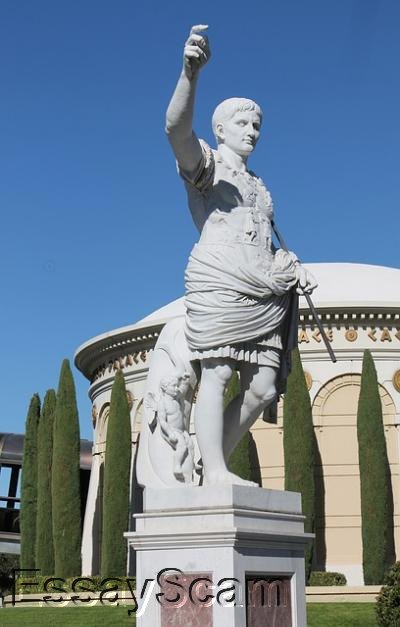 The hunger for more power led to his alienation from republican senators who were also envious of his success, and saw in him an aspiring king and Romans had no desire for monarchial rule. A group led by Cassuis and Bruttus, former enemies and serving in the senate assassinated him on 15th of March 44 BC. This was the beginning of the end of civil wars that ended the Republic.
Born Gaius Octavius on 23 September 63 BC in Rome, He assumed the name Augustus to become the first emperor of Rome in 27 BC after his uncle Julius Ceaser was assassinated and the fall of the republic. He avenged his uncle's death by defeating Antony and Cleopatra at the Battle of Actium and fought back the military troops that were defending Cassius and Bruttus (Wikipedia). His uncle had named him heir to the throne but he had to fight off Cleopatra VII and Mark Antony, who both wanted to be in power.
Unlike his uncle, he did not become a dictator and instead founded the principate, a system of monarchy headed by an emperor holding power for life. He was in charge of all aspects of the roman state and the army was under his direct command. (BBC History) the country was peaceful and prosperous under his rule. He died on august 19 in 14.
Julius Ceaser, though a dictator left a greater legacy. His achievements throughout his career are unmatched. He fought and won many battles and was awarded many triumphs he played a critical role in the events that led to the rise of the Roman Empire and fall of the roman republic. Having seen how chaotic and dysfunctional the roman republic had become in his early days of his career, he had three goals. He wanted to bring order create a great empire. He wanted to suppress all armed resistance and thus bring back order and he achieved this when he defeated Pompey. He established his authority by decreasing other political institutions' power and increasing his own. He enacted reforms meant to address long neglected issues. While Augustus did not declare himself dictator he was a military dictator.
References
Garfield, N. (2001). Echoes from the Past: World History to the 16th Century. Toronto: McGraw-Hill Ryerson Limited.
McKay, J.P., Bennett D. H., Buckler J., Beck, R.B., Ebrey, P. B., and Crowston, C. H. (2011). A History of World Societies, Volume 2: Since 1450. London: Bedford/St. Martin's.