
Aug 21, 2018 | #1
Urie Bronfenbrenner's Theory of Environmental Influence holds that there are several layers of environment that affect children's development. At the most basic level is the family, which Bronfenbrenner calls the Microsystem; it includes the child's family, which provides support for the child with good nutrition, homework, and communicating with teachers about the child's progress (Ormrod 22). The neighborhood and community provide another layer of support; Bronfenbrenner includes these in the Microsystem, as they all have a direct influence on the child's development. Next is the Mesolayer, which provides connections between the Microsystem and the Exosystem, the next layer. These are important connections between, for example, the family and school, or the family and the child's peers. A difficult family life can mean that the child cannot easily development strong and appropriate relationships with his peers. The Exosystem includes friends of the family, neighbors, mass media, social welfare and legal services. Moving farther out is the Macrosystem, which includes the attitudes and ideologies of the culture. Here, such factors as poverty and ethnicity can affect development in a negative way. Finally, there is the Chronosystem, where sociohistorical conditions can affect a person over his or her lifetime. One example would be the rights women have gained in the workplace over the past 30 years.
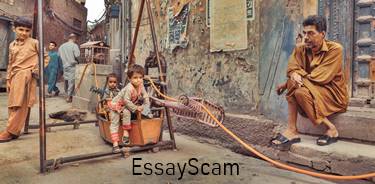 Popular media gives us examples of how factors like poverty, poor nutrition, and family support systems can bolster or interfere with a child's development. A story in the magazine Georgia Trend discusses the "Poverty Factor" and how poor home circumstances often mean poor school performance. In Georgia, more than a quarter of the children live in poverty, Grillo writes. Educators there say the connections between the stresses of living in poverty and poor academic performance are easy to see. The dropout rate for students from low-income families is shocking: more than four times greater than the rate for students from higher-income families (Grillo 14).
Economically disadvantaged kids are also four times more likely to have lower scores on Criterion-Referenced Competency Tests (CRCT). Many in the education field (as well as parents and other groups) criticize the heavy reliance on standardized competency tests. These tests may give an idea of students' progress but they do little to help the students themselves. Educators need to learn how to better meet the needs of economically disadvantaged students and families-providing the connections Bronfenbrenner's theory shows are so vital to child development.
Poverty affects education in many ways (Sharp). Impoverished students have fewer opportunities to receive educational assistance than do students from wealthier families; their families cannot afford tutors and may not be able to provide help at home, whether due to family members' own lack of skills, family instability (divorce, violence), or parents working long hours to try to pay the bills. The Bangor Daily News reports that poverty's unseen effects on a student's education can include being misdiagnosed with learning disabilities. The president of the NEA, according to this story, says that mislabeling children as disabled when they are not disabled can cause schools to provide services which are not needed and a lack of services which are, thereby resulting in reduced education.
Another big problem that poverty and lack of adequate family support can cause is improper nutrition. The New York Times reports that, although 12 million students across the country receive free breakfasts through a program managed by the Department of Agriculture, many more students need to be receiving this nutrition ("How to Start a Good School Day" A26). Despite the fact that providing free breakfasts reduces hunger and can improve students' academic performance, the New York Times editorial says, there is a huge disparity in the rates of participation in free nutrition programs across the country. Newark, New Jersey provides breakfast to 92 percent of low-income students, while New York City only feeds 35 percent of its students who are at risk for hunger ("How to Start a Good School Day" A26). This gap is disturbing when we consider the importance good nutrition plays in child development. According to Bronfenbrenner's Theory, children who lack this basic element of nutritional support will be at risk of developmental problems.
The important role that education plays in a child's life begins long before first grade. In another New York Times story, it is reported that "children from low-income families start kindergarten an average of 12 to 14 months behind their wealthier peers in language development and pre-reading skills" (Rich A14). Preschool-aged children who come from disadvantaged environments can make up much of this difference through appropriate preschool programs. However, the New York Times reveals, in the 2011-2012 school year, the largest annual drop in ten years in state financing for preschool occurred, falling by almost 10 percent (Rich A14). This has been described as "a state of emergency" by W. Steven Barnett, director of the National Institute for Early Education Research at Rutgers University. Barnett was the lead author of a report showing that "enrollment in state-financed preschool has stagnated at about 28 percent of 4-year-olds and four percent of 3-year-olds" (Rich A14). This is an abysmal rate that is unacceptable in view of the lifetime effects it could have on children whose development will be stunted from an early age. President Obama recently announced a plan, financed by raising federal cigarette taxes, which would fund preschool for all 4-year-olds from low- or moderate-income families. It remains to be seen whether the program will be adequately funded or how it will be implemented by the states.
The above news stories describe issues which could have serious outcomes for education. It is frustrating for an educator to realize that the effects on children of a disadvantaged environment are known: studies have repeatedly shown that poverty, stressful home life, lack of access to educational materials, and poor nutrition have grave adverse effects. It is encouraging that the president is trying to ensure that all children have access to preschool. It is somewhat less encouraging to think about the problems Congress has had (or created themselves) in advancing legislation of any kind, much less for education.
The potential outcomes for education will depend upon how law-makers, educators, and parents react to the problems presented here. There is already some reason for hope, as evidenced by the president's preschool proposal. It helps that the media are reporting things like the National Institute for Early Education Research report. But more needs to be done. Educators need to make sure their voices are heard. Politicians do not react to issues that have no advocates. Cynical as it may sound, if there is no one making enough noise on a particular issue, that issue will die a slow death (or perhaps a quick one) and never be addressed.
Education relies upon politicians to pass the laws which supply the funding that gets programs financed. These are difficult days for finding funding. Budgets are being squeezed beyond capacity and still the available money falls far short of what is needed to accomplish what we know needs to be done. It is easy to get Congress or state governments to react in the face of a catastrophic emergency like a hurricane or a bombing. The tragedy is all over the news; the stories make good television.
Devastation is shown and people's pocketbooks as well as the public coffers open up. But what people need to realize is that the devastation caused by childhood poverty is just as great as any natural disaster or act of terrorism. Once a child is launched on a path of hunger, neglect, misdiagnosis, and unrelenting stress, it is almost impossible for her to recover. Yes, there are a few examples we can find, like the educators mentioned in "The Poverty Factor" who managed to prevail against the odds (Grillo 14-21). But they are the exceptions which prove the rule: in order to thrive, a child must have a nourishing environment.
So, the answer to the question "what are the potential outcomes?" depends entirely on us. It is quite possible that the status quo will remain; cries of "there's no funding for that!" will continue to be heard. Catastrophes with a good visual hook will take precedence over the quiet catastrophe of doing nothing for our children. The money that is made available will be spread so thin that it cannot accomplish any of the goals it was meant to. Children will go to school hungry, have trouble concentrating, fail to learn, be put into classes for the disabled, and either graduate or, more likely, drop out-either way, with an inadequate education.
Or ... educators and parents will make enough noise; politicians will actually be forced by their constituents to listen; priorities will be seen to be skewed and will be reshuffled, putting our children first. It would be nice to be optimistic and say "of course, this will happen." And it can. But only time will tell if it actually does.
Works Cited
Grillo, Jerry. "The Poverty Factor." Georgia Trend 28.4 (2012): 14-21. Print.
"How to Start a Good School Day." New York Times 7 March 2013: A26. Print.
Ormrod, Jeanne E. Educational Psychology: Developing Learners. Boston : Pearson/Allyn & Bacon, 2011. Print.
Rich, Motoko. "Preschool Financing Has Dropped, Study Finds." New York Times 29 April 2013: A14. Print.
Sharp, Kelly. "Poverty Affects Education." Bangordailynews.com. Bangor Daily News, 3 December 2012. Web.
Popular media gives us examples of how factors like poverty, poor nutrition, and family support systems can bolster or interfere with a child's development. A story in the magazine Georgia Trend discusses the "Poverty Factor" and how poor home circumstances often mean poor school performance. In Georgia, more than a quarter of the children live in poverty, Grillo writes. Educators there say the connections between the stresses of living in poverty and poor academic performance are easy to see. The dropout rate for students from low-income families is shocking: more than four times greater than the rate for students from higher-income families (Grillo 14).Economically disadvantaged kids are also four times more likely to have lower scores on Criterion-Referenced Competency Tests (CRCT). Many in the education field (as well as parents and other groups) criticize the heavy reliance on standardized competency tests. These tests may give an idea of students' progress but they do little to help the students themselves. Educators need to learn how to better meet the needs of economically disadvantaged students and families-providing the connections Bronfenbrenner's theory shows are so vital to child development.
Poverty affects education in many ways (Sharp). Impoverished students have fewer opportunities to receive educational assistance than do students from wealthier families; their families cannot afford tutors and may not be able to provide help at home, whether due to family members' own lack of skills, family instability (divorce, violence), or parents working long hours to try to pay the bills. The Bangor Daily News reports that poverty's unseen effects on a student's education can include being misdiagnosed with learning disabilities. The president of the NEA, according to this story, says that mislabeling children as disabled when they are not disabled can cause schools to provide services which are not needed and a lack of services which are, thereby resulting in reduced education.
Another big problem that poverty and lack of adequate family support can cause is improper nutrition. The New York Times reports that, although 12 million students across the country receive free breakfasts through a program managed by the Department of Agriculture, many more students need to be receiving this nutrition ("How to Start a Good School Day" A26). Despite the fact that providing free breakfasts reduces hunger and can improve students' academic performance, the New York Times editorial says, there is a huge disparity in the rates of participation in free nutrition programs across the country. Newark, New Jersey provides breakfast to 92 percent of low-income students, while New York City only feeds 35 percent of its students who are at risk for hunger ("How to Start a Good School Day" A26). This gap is disturbing when we consider the importance good nutrition plays in child development. According to Bronfenbrenner's Theory, children who lack this basic element of nutritional support will be at risk of developmental problems.
The important role that education plays in a child's life begins long before first grade. In another New York Times story, it is reported that "children from low-income families start kindergarten an average of 12 to 14 months behind their wealthier peers in language development and pre-reading skills" (Rich A14). Preschool-aged children who come from disadvantaged environments can make up much of this difference through appropriate preschool programs. However, the New York Times reveals, in the 2011-2012 school year, the largest annual drop in ten years in state financing for preschool occurred, falling by almost 10 percent (Rich A14). This has been described as "a state of emergency" by W. Steven Barnett, director of the National Institute for Early Education Research at Rutgers University. Barnett was the lead author of a report showing that "enrollment in state-financed preschool has stagnated at about 28 percent of 4-year-olds and four percent of 3-year-olds" (Rich A14). This is an abysmal rate that is unacceptable in view of the lifetime effects it could have on children whose development will be stunted from an early age. President Obama recently announced a plan, financed by raising federal cigarette taxes, which would fund preschool for all 4-year-olds from low- or moderate-income families. It remains to be seen whether the program will be adequately funded or how it will be implemented by the states.
The above news stories describe issues which could have serious outcomes for education. It is frustrating for an educator to realize that the effects on children of a disadvantaged environment are known: studies have repeatedly shown that poverty, stressful home life, lack of access to educational materials, and poor nutrition have grave adverse effects. It is encouraging that the president is trying to ensure that all children have access to preschool. It is somewhat less encouraging to think about the problems Congress has had (or created themselves) in advancing legislation of any kind, much less for education.
The potential outcomes for education will depend upon how law-makers, educators, and parents react to the problems presented here. There is already some reason for hope, as evidenced by the president's preschool proposal. It helps that the media are reporting things like the National Institute for Early Education Research report. But more needs to be done. Educators need to make sure their voices are heard. Politicians do not react to issues that have no advocates. Cynical as it may sound, if there is no one making enough noise on a particular issue, that issue will die a slow death (or perhaps a quick one) and never be addressed.
Education relies upon politicians to pass the laws which supply the funding that gets programs financed. These are difficult days for finding funding. Budgets are being squeezed beyond capacity and still the available money falls far short of what is needed to accomplish what we know needs to be done. It is easy to get Congress or state governments to react in the face of a catastrophic emergency like a hurricane or a bombing. The tragedy is all over the news; the stories make good television.
Devastation is shown and people's pocketbooks as well as the public coffers open up. But what people need to realize is that the devastation caused by childhood poverty is just as great as any natural disaster or act of terrorism. Once a child is launched on a path of hunger, neglect, misdiagnosis, and unrelenting stress, it is almost impossible for her to recover. Yes, there are a few examples we can find, like the educators mentioned in "The Poverty Factor" who managed to prevail against the odds (Grillo 14-21). But they are the exceptions which prove the rule: in order to thrive, a child must have a nourishing environment.
So, the answer to the question "what are the potential outcomes?" depends entirely on us. It is quite possible that the status quo will remain; cries of "there's no funding for that!" will continue to be heard. Catastrophes with a good visual hook will take precedence over the quiet catastrophe of doing nothing for our children. The money that is made available will be spread so thin that it cannot accomplish any of the goals it was meant to. Children will go to school hungry, have trouble concentrating, fail to learn, be put into classes for the disabled, and either graduate or, more likely, drop out-either way, with an inadequate education.
Or ... educators and parents will make enough noise; politicians will actually be forced by their constituents to listen; priorities will be seen to be skewed and will be reshuffled, putting our children first. It would be nice to be optimistic and say "of course, this will happen." And it can. But only time will tell if it actually does.
Works Cited
Grillo, Jerry. "The Poverty Factor." Georgia Trend 28.4 (2012): 14-21. Print.
"How to Start a Good School Day." New York Times 7 March 2013: A26. Print.
Ormrod, Jeanne E. Educational Psychology: Developing Learners. Boston : Pearson/Allyn & Bacon, 2011. Print.
Rich, Motoko. "Preschool Financing Has Dropped, Study Finds." New York Times 29 April 2013: A14. Print.
Sharp, Kelly. "Poverty Affects Education." Bangordailynews.com. Bangor Daily News, 3 December 2012. Web.