
Jan 17, 2008 | #1
CCTV Research Problem
Providing security to a broad range of people while guarding against an infinite array of possible threats has always been a complicated administrative responsibility. The difficulty and enormity of such a task, particularly in areas of heavy human traffic where the potential for unlawful behavior is extensive, are in and of themselves qualities which pose a real challenge to city planners, organizational security administrators, crime prevention groups and law enforcement agencies. However, beyond these considerations, it falls upon such security providers to establish a balance between policy and execution that provides security against real threats and that which, through its intrusiveness, becomes a draconian presence in the lives of law-abiding citizens.
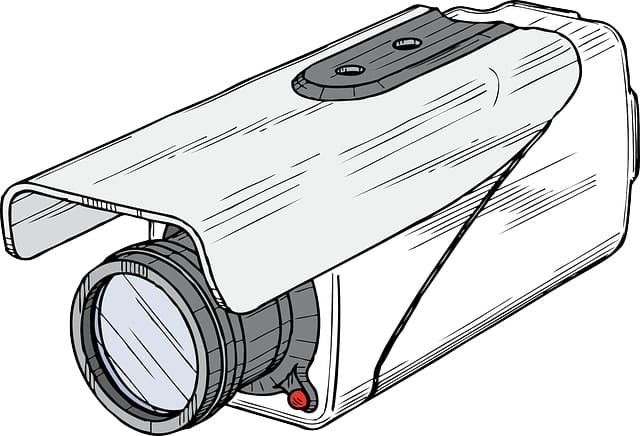 Such a paradox points to the heart of our research problem, which concerns the extent to which advancing technologies and expanding concrete capabilities of financially substantial entities like corporations, government institutions and state-run agencies should be utilized to perform pervasive security functions. The growing prevalence of various consumer oriented technological accessories has had the effect of centralizing biographical facts, statistical survey and demographic datum into information communities.
In the United Kingdom, as well as in other major world powers such as the United States and leading nations in the European Union, leaders have for years grappled with the drive to establish the most effective and appropriate means to employing one such technological device. The use of Closed Circuit Televison (CCTV), both in private institutions and public spaces, has been in effect in a variety of capacities in its history. CCTV is a closed-loop broadcast which, contrary to public broadcasts that operate on transmitted frequency, is made feasible through an exclusive connection between a camera or set of cameras and a monitor or set of monitors. Such technology enables a transmitting source to broadcast its message only to selected receivers.
The ways in which we have chosen to utilize Closed Circuit Television in recent years have been shaped by a confluence of our technological progress and recent cultural trends. And due to the combined evolution in our technological capabilities over the last decade--which has led to the almost limitlessly expansive digital universe--and the growing public interest in finding more effective ways to establish security against criminality, the dominant use of CCTV in the security industry is today greater than it has ever been.
Something which makes CCTV so attractive as a means of law-enforcement, public surveillance and internal security is the relative simplicity of its design. The technology required for such a means of security is well within the range of the modest economy terrain to even a convenience store clerk. "Closed Circuit Television (CCTV) is a television transmission system in which live or prerecorded signals are sent over a closed loop to a finite and predetermined group of receivers, either via coaxial cable or as scrambled radio waves that are unscrambled at the point of reception." (McCarthy, 1) This most basic model requires nothing more than a coaxial cable, a camera and a monitor. This last item is essentially a television without tuning receptors.
Certainly, there is little which is controversial about such technology in the hands of a convenience store clerk, a government office or a prison facility. However, its growing association with the advancing digital capacity of law enforcement and government agencies is giving surveillance a dramatically expanded role in public spaces. The proliferation of heavily coordinated and monitored items such as the cell phone, wireless internet portals and mobile-satellite mapping devices is contributing to the establishment of traffic-databases trained to identify individuals. The capacity of law enforcement to use such information in synchronicity with closed circuit monitors through presided areas represents a great opportunity for expanded effectiveness, not just in prosecution of crime but in deterrence and prevention as well.
CCTV as a means to surveillance had already gained political support by the mid-nineties:
"The government [wa]s heavily promoting the use of video surveillance as a key plank in its law and order strategy. [Its] initiative was to offer a funding pot to support local CCTV projects. The Home Secretary first announced the CCTV competition on 18 October 1994. There were 480 bids from local authorities, community groups, schools and industrial estates. Nationally, more than one hundred schemes received a share of the £5 million funding, with a further £13.8 million levered in from other partnerships." (PI, 1)
This was the start of a boon to the industry but paled in comparison to what it would soon experience. The terrorist attacks on the United States on September 11th, 2001 highlighted the fundamental need for strong and meaningful routes to security. Naturally, the growing abilities now available through digital technology and video surveillance became a purposeful avenue through which to explore the most optimal way to achieve such an end. Governmental emphasis and a public demand created the drive toward new security legislation. In 2002, such legislation appeared, and attempted to incorporate all of the above consumer and video law-enforcement devices into one cohesive strategy of public surveillance. Thus, "Part 11 of the UK Anti-Terrorism Crime and Security Bill (ATCS) will allow automated surveillance of the private lives of a substantial proportion of the population through analyzing the pattern of their electronic communications. The powers are deliberately broad, and can be exercised quite generally for non-terrorist as well as terrorist investigations." (Bowden, 1) This prospect has invoked concern from defendants of privacy rights over all manner of information gathering which targets citizens without provocation:
"The privacy picture in the UK is mixed.[2749] There is, at some levels, a strong public recognition and defense of privacy. Proposals to establish a national identity card, for example, have routinely failed to achieve broad political support. On the other hand, crime and public order laws passed in recent years have placed substantial limitations on numerous rights, including freedom of assembly, privacy, freedom of movement, the right of silence, and freedom of speech." (E.U.D.P.D., 10)
These circumstances deliver contestants on both sides of the security vs. privacy issue to the point of current debate over closed circuit television. Though such a device has innumerable uses, one of the most difficult of these implementations to resolve has been that within the field of security provision. As with many issues which revolve around the contest between security and privacy rights, the arguments which shroud such a resolution are derived from deeply polarized camps. A close inspection of the question of CCTV as a method for security reveals there is merit to both perspectives. While Closed Circuit Television has been responsible for a great many advances in any number of disciplines, its use as a tool for security provision must undergo extensive discourse and refinement before it can comply with proper standards of civil liberty. Thus, the research proposal here will proceed with an examination of the various uses of Closed Circuit Television, with the intent to ultimately determine whether the technology is, on the balance, more constructive for security purposes than it is problematic for its privacy implications.
Amongst the primary aims of the research here proposed, the top priority will be to determine the value of Closed Circuit Television to the application of security. This will incorporate a set of additional aims relevant to the subject. One such aim will be the determination as to what extent the proliferation of CCTV may produce the opportunity for the technology's users to violate individual privacy. An additional aim here would be to determine what additional uses have been yielded by CCTV and to what benefit these users are in elucidating the above to aims.
The chief objective of this study will be to determine whether or not the benefits of CCTV to providing security against domestic terrorism outweigh its drawbacks.
Theoretical Perspective
Arguments both for and against the public use of Closed Circuit Television are centered on rationality. Advocates of CCTV will generally argue that the availability of the technology and its inherency both in deterring crime and in helping to solve committed crimes will justify its use to the fullest extent of its technical capacity. By contrast, those who argue against the use of CCTV propose the rational summation that such opportunities for security and public oversight as those hereby provided tend to offer agencies both governmental and private also tend to provide these same agencies with the opportunity to spy on private citizens.
Therefore, all evaluations by the research project would take the perspective to the rational choice theory in attempting to determine the extent to which CCTV technology is either beneficial or problematic. As we seek to frame this discussion on contending with the issue of terrorism, it is also constructive to consider the approach of rationality in addressing the legitimacy of CCTV as a means to combating terrorism. As opposed to many of the offensively-based approaches to undermining the dangers of terrorism to domestic security, we may consider that CCTV offers a more preventive instrument as well as one which may arm its private users with the capacity to deter security breaches on their own property. With these considerations at hand, it is useful to argue that the rational choice theory would be ideal in demonstrating whether or not these are practical and achievable aims through the method at issue.
This is to say that "the application of rational expectations theory to policies of retaliation against terrorism suggests that only unexpected retaliations will be effective in causing terrorist attacks to deviate from their natural rate and that there is a time inconsistency problem in responding to terrorism. These are factors which will be due for consideration as an outcome of research intended to characterize the usefulness or effectiveness of the approach, either in the context of terror security or otherwise.
The use of this approach is underscored by a brief history of CCTV, which produces evidence of the technology's evolution and its eventual application to differing functions upon its achievement of suitability thereto. This history will demonstrate a process by which technological ability has begotten use-refinement, with uses emerging according to the rational demand of a problem and the rational application of this as a solution. As the proposal will ultimately be intended to determine whether or not this application-rational or otherwise-is appropriate, it is reasonable at this juncture to engage the technology's history. In its development, rational choice can be seen as a continued impetus for its evaluation.
Indeed, the utilization of Closed Circuit Television was, in its earliest incarnations, was imagined as a valuable means for the advance of capitalistic and consumer oriented purposes. In the 1930's, as broadcast television was itself a scientific development still relegated to exclusive circles, the development of closed circuit television made its earliest appearances in journalistic accounts such as Orin Dunlop's New York Times series which predicted the widespread use of such devices in the future, given its potential ability to address already existing issues. Specifically, this author imagined CCTV finding extensive points of usefulness for institutions of education, commercial factories and entertainment venues, where it was his estimation that a rational need already existed.
His theory was soon bore out by "'on-site' media industry, which places video advertising monitors in grocery stores, shopping malls, and other retail sites." This practice "dates back to a series of tests involving closed circuit advertising in department stores that took place in the 1940s." (McCarthy, 1). In Britain, this manifested itself most significantly for the first time in 1940's as well, when the government commissioned the experimental proliferation of the Pye Observation System. One of the earliest publically available Closed Circuit Television devices, this was a simple, single-camera/single monitor item which was marketed to small retail owners. This represents one of the first forays into security provision yet undertaken by purveyors of the CCTV system.
In the 1950's, the closed circuit format soon found a stationary home in the movie theatre, where such devices were used to broadcast sporting events to movie patrons. The live feeds that broadcast football games and horse-races at a time when many fans could do no more than listen to such events on the radio became a popular draw and a common investment for most theatres. This commonality continued as such through the 1960's and 1970's. The graduating availability of cable television thereafter reduced the relevance of such side-attractions however and the CCTV at the movie theatre passed out of fashion. Still, the practice of simulcast in casinos, which enables gamblers to place their wages in live concert with the televised race, has conceptual similarities, though manifested through satellite broadcast. This is a form which CCTV has come to assume with technological advance, albeit at a rather large, and complexly networked one.
In the 1980s, CCTV began to come into vogue through a broad array of social programs and educative initiatives. "Animated to protect free speech and promote grass roots video story production, CCTV established some of the first public access cable television channels" in 1984 (CCT, 1). It thus became a popular mode for classroom activities, emergency broadcast services and local news wires.
Its real industrial impact, however, swelled in the 1990s and the early millennium with rational use increasingly apply an emphasis on security concerns. This application, which would help to mainstream the CCTV technology, would be further inclined by a declining cost for such systems, thus contributing to a greater overall accessibility. During the early 1990's, growth of this industry began to achieve annual figures on the order of fifteen and twenty percent. (PI, 1) Support of the British government for such proliferation within the industry have since afforded even greater expansion to its standard-bearers. "In his speech to the October 1995 Tory Part conference, [former] Prime Minister Major announced that the government would fund an additional 10,000 cameras." (PI, 1) In the time since the inception of the war on terror in 2001, the security industries at large, and CCTV makers in particular, have enjoyed even greater levels of growth. This is, of course, a distinctly relevant fact due for consideration in our research, as the proposal acknowledges this particular context as one both rationally contributing to opportunity and drawback alike.
Research Methodology
Our approach to this subject will concern both secondary and primary research methods. As a preliminary step, secondary research will be employed through a thorough literature review. Examining a wide array of sources on the subject of Closed Circuit Television, this aspect of the process will concern the gathering of materials contributing to a fuller understanding to the capabilities of the technology. This will cause us to review full-length texts, online informational references, news articles, legal documents and scholarly journals-just to name a few sources-in order to resolve a basic outlook on the way the technology is used and the benefits or drawbacks thereby yielded. This aspect of the research process will also seek to clarify issues relating directly to security, such as the level of apparent efficiency of the technology or the expectations which users of this technology have arrived at in resolving the necessity of its application.
The primary research will also concern a reference gathering process, though in this case a more focused one. Using two cities which have recently instituted city-wide, government-supported CCTV programs specifically in response to heightened terrorism concerns, the study will gather information on the process of implementation, on the specific and technical aspects of this implementation and of the legal and legislative considerations relevant thereto.
The British cities of Manchester and Leeds can provide us with a useful model for examination of the research problem. In the perspective of both cities named, surveillance through Closed Circuit Television is seen as a rational means to offering citizens security and inspiring deterrence from criminal activity in would-be offenders. According to its advocates there, it is additionally responsible and necessary that such technologies as these be used to their utmost potential. But part and parcel of that potential is being incorporated in a broader and more coherent strategy of crime prevention. In the aforementioned cities for example, the planners respective thereto are "developing comprehensive '24-hour city' strategies which mix better street design and lighting with mixed use planning, licensing relations, improved public transport and proactive cultural 'animation' policies." (Graham, 35) In the perspective of these cities, CCTV technologies are domestic approaches to security concerns which are minded toward policies that are both respectful to civil liberties and humanistically structured to meet sensible goals in community-planning. Accordingly, these cities come from an administrative perspective that Closed Circuit Television will continue to be an important part of expanding law-enforcement's observational capacity, with its uses being constantly honed to preserve and perpetuate the very freedoms which they are instructed to protect.
This is a view which will be explored in full through direct and indirect source gathering measures. The primary research will concern both gathering all manner of reference material concerning the application of this program and establishing contact with the appropriate personnel in both city governments. The former of these processes will concern the reconnaissance of all publicly available information of the programs at hand, concerning their execution, their short and long-term value, their success at preventing or solving crimes and some indications of their failures or of their violation of civil rights.
Contact with officials within the government should facilitate a more direct channel of information, through which interviews can be conducted, or questionnaires administered, in order to gain some insight into the official perspective held by legislators. This should help to provide both qualitative information on the level of success achieved thus far, as well on the shortcomings exposed in the system to this juncture. Quantitative data may also be yielded from this process concerning success rates, failure rates and other factors to be encountered and accounted for through the data gathering process.
Anticipated Problems
Chief among the likely challenges to be faced by execution of this proposal will be the necessary secrecy which often surrounds security measures, especially in the age of terrorism. It is reasonable, and even likely, that government personnel will balk at answering certain questions or providing certain pieces of information, as the public presentation of such information could be interpreted as compromising security reliability or effectiveness. Therefore, we will approach the research with an understanding of this likelihood and, where such is encountered, a relevant caveat will be provided within the context of both data collection and data analysis.
Conclusion
On the surface, Closed Circuit Television surveillance would seem an immediately practical route to deterring and even preventing security breaches and criminal acts in public spaces. However, as federal policy shifts its focus in the wake of the war on terror toward seeking out terrorism before it occurs, the methods of surveillance which Parliament has made available to itself have become more sweeping, less regulated by judicial restraint and far less discriminatory over to whom amongst the population it applies such surveillance. This is the balance which the proposal here will seek to explore.
Bibliography:
Bowden, Caspar. Closed Circuit Television for Inside Your Head: Blanket traffic data retention and the emergency anti-terrorism legislation. Duke Law & Technology Review.
Brophy-Baermann, Bryan & John A.C. Conybeare. Retaliating against Terrorism: Rational Expectations and the Optimality of Rules Versus Discretion. American Journal of Political Science. Vol. 38, No. 1, p. 196-210.
Chittendam Community Television (CCT). (2004). History of CCTV. Burlington, VT: Center for Media & Democracy.
Constant, Mike. (2003). What is Closed Circuit Television? CCTV Today.
EU Data Protection Directive. (April 2004). United Kingdom of Great Britain and Northern Ireland. Isle of Man: The Office of the Data Protection Supervisor.
Graham, Brooks and Heery, 1996, Towns on the Television: Closed Circuit TV in British Towns and Cities. University of Newcastle, Local Government Studies, Vol.22, No.3, pp.1-77.
Kendall M.D., Perry. Closed Circuit Television Surveillance of Public Space in Vancouver: A Brief Overview of Evidence from the UK & Arguments About its Use in the Downtown Eastside. Vancouver, B.C.: Vancouver Sun.
McCarthy, Anna. (2002). Closed Circuit Television. British Museum of Television.
Privacy International. Statement on Closed Circuit Television (CCTV) Surveillance. London: Privacy International.