
Rafia 4 | - Freelance Writer
1 day | #1
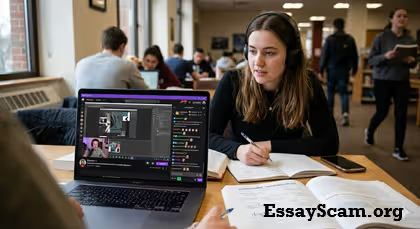
It has been recognized that there is a literature gap related to learner-facilitated crowd-sourced live-streamed learning. The overarching goal of this study is to analyze the learning affordances of Twitch. This will be done through the application of the theory of multimodality (Domingo, 2016; Jewitt, 2013; Jewitt & Kress, 2003), the culture of Twitch will be explored, including how it fosters learner agency and collaborative learning (Payne et al., 2017). The second way this exploration will be done is through assess how Twitch's multimodal platform influences learning through the combination of modes and open access platform (Lammers, 2012; Payne et al., 2017). The third way this exploration will be done is through a virtual ethnographic approach to examine the goals and motivations of streamers and participants. Overall, this study is important for adding to the limited existing literature regarding lifelong learners leveraging the expanding digital resources of multimodal virtual spaces. This is being done by specifically answering the following research questions:
 1. How do live-streamers identify, evaluate, and craft their streaming to engage in the process of knowledge development and meaning making?
2. How do live-streaming multimodal platforms influence knowledge development?
3. What are the motivations of live-streamers to broadcast their learning?
4. What are the motivations of participants to join learner-directed education channels?
This literature review will contain a theoretical foundation, which will be based on constructivism and post-structuralist theories. Literature will also be assessed based on socially constructed knowledge, learner agency, multimodal literacy and learning theory, digital affordances, crowd-sourced learning, affinity spaces, and Twitch's learning affordances.
Constructivism
Established by Jean Piaget, constructivism stresses the significance of the active participation of students in building understanding for themselves. Students are believed to utilize background understanding and ideas to help them in their acquisition of unique information. Under the theory of extreme constructivism, comprehending relies on one's subjective analysis of experience as opposed to unbiased 'truth' (Adams, 2006; Hug, 2010; Kivelä & Siljander, 2014). Constructivism asks why students do not learn deeply by listening to an instructor, or reading from a book. The learning theories of John Dewey, Maria Montessori, and David A. Kolb serve as the structure of the application of constructivist learning theory in the class. Constructivism has lots of ranges such as active learning, discovery learning, and understanding structure; however, all variations promote a student's complimentary expedition within an offered structure or structure (Adams, 2006; Hug, 2010; Kivelä & Siljander, 2014).
Post-Structuralist Theory
Structuralism was an intellectual motion in France in the 1950s and 1960s that studied the hidden structures in cultural items (such as texts) and utilized analytical principles from linguistics, psychology, sociology, and other fields to analyze those structures. Structuralism presumes the idea of binary opposition, in which often utilized sets of associated however opposite words (ideas) are typically organized in a hierarchy, for instance: Enlightenment/Romantic, male/female, speech/writing, rational/emotional, signified/signifier, symbolic/imaginary (Hartley, 2010).
Post-structuralism declines the structuralist concept that the dominant word in a set is reliant on its subservient equivalent and rather argues that establishing understanding either on pure experience (phenomenology) or organized structures (Structuralism) is difficult due to the fact that history and culture condition the research study of underlying structures and these are subject to misconceptions and predispositions. A post-structuralist technique argues that to comprehend a things (e.g., a text), it is essential to study both the item itself and the systems of understanding that produced the things. Some scholars associated with structuralism, such as Roland Barthes and Michel Foucault, likewise ended up being notable in post-structuralism (Hartley, 2010).
Socially Constructed Knowledge
Cooperative learning and group tests design the constructivism theory due to the fact that they permit for students to communicate in methods that deepen their learning. When engaged in this type of learning, students can show of their freshly obtained understanding, and process what they are learning by talking with and actively listening to their peers, and establish a typical understanding about numerous subjects. It permits students to get at a much deeper understanding of product due to the fact that they have actually talked through it, a procedure that assists them keep what they learn (Lewis, 2016).
When utilized with students, it is essential to permit students to believe, talk, and otherwise show socially about an event instantly after it has taken place to boost the memory of that occasion. In this case, it is possible to refer to the 'event' as the brand-new piece of details. Memory is not repaired at the minute of learning, and repeating offers the fixative. Learning along with others can likewise assist boost connections that learners have in between occasions and previous understanding. Cooperative learning likewise permits the instructor to set the phase for students to be accountable for their own learning. This indicates that students will likewise be accountable for showing their learning to others, which is where the concept that understanding is socially built can come into play (Lewis, 2016).
In conclusion, understanding is socially built due to the fact that people and students can learn much better through others - through the social interactions that can be gotten when students take an issue and actively attempt to resolve it while working along with others in a cooperative group environment. Students develop their scholastic understanding on the subject by hearing viewpoints and perspectives of others; however, they likewise learn social understanding by being in a circumstance where they need to take into account the viewpoints and views of others (Lewis, 2016).
Learner Agency
Lifelong Learning. In some contexts, the term 'lifelong learning' progressed from the term 'life-long students.' The term leads to the acknowledgement that learning is not restricted to youth or the class however happens throughout life and in a series of scenarios. In other contexts, the term 'lifelong learning' progressed naturally. The very first lifelong learning institute started at The New School for Social Research (now New School University) in 1962 as an experiment in 'learning in retirement.' Later on, after comparable groups formed throughout the United States, many selected the name 'lifelong learning institute' to be inclusive of non-retired individuals in the same age group (Miettinen, 2000; Onorati et al., 2017).
Throughout the last fifty years, continuous clinical and technological innovation and modification has actually had extensive results on how learning is comprehended. Learning can no longer be divided into a location and time to obtain understanding (school) and a location and time to use the understanding gotten (the office). It can shapeshift and produce into the type of official learning or casual learning, or self-directed learning (Miettinen, 2000; Onorati et al., 2017).
Lifelong learning has actually been explained as a procedure that consists of individuals learning in various contexts. While the learning procedure can be used to students of all ages, there is a focus on grownups who are returning to arranged learning. There are programs based on its structure that address the various requirements of students, such as the UNESCO's Institute for Lifelong Learning, which caters to the requirements of the marginalized and disadvantaged students (Miettinen, 2000; Onorati et al., 2017). Lifelong learning focuses on holistic education and it has two measurements, particularly, broad, and lifelong alternatives for learning. These show learning that incorporates conventional education propositions and contemporary learning chances. Some authors highlight that lifelong learning is established on a various concept of understanding and its acquisition (Miettinen, 2000; Onorati et al., 2017).
Lifelong learning is differentiated from the principle of continuing education in the sense that it has a wider scope. Unlike the latter, which is oriented towards adult education established for the requirements of markets and schools, this type of learning is worried with the advancement of human capacity, acknowledging each person's capability for it (Miettinen, 2000; Onorati et al., 2017). The theories of specific significance when thinking about lifelong learning are cognitivism and constructivism. Cognitivism, most significantly Gestalt theory, speaks of learning as making sense of the relationship in between what is old and what is brand-new. Constructivism provides itself well to Lifelong learning as it brings together learning from lots of various sources consisting of life experiences. Lifelong learning is being acknowledged by conventional colleges and universities as legitimate in addition to degree achievement. Some learning is achieved in sectors or interest classifications and can still be important to the specific and neighborhood. Whether brick-and-mortar or range education organizations, there is an excellent financial effect worldwide from learning, consisting of lifelong learning, for all age groups (Miettinen, 2000; Onorati et al., 2017).
Learner-Directed Learning
Learner-directed learning is a mentor technology that intends to offer the student higher control, ownership, and responsibility over his/her own education. Established to counter institutionalized, mass, education, student-directed mentor enables students to make their own choices while they learn in order to make education far more significant, pertinent, and efficient (Rashid & Asghar, 2016). Student-directed learning notes that with each progressive velocity, the stress on people, not simply students, to make sense of the world boosts. It impacts everybody, it is most obvious in kids: eventually, the organization of mass education has actually been not able to keep up with the modifications determined by the extreme expansion of understanding. Students, hence, are the claim of Student-Directed Teaching, are stopped working by the system, leaving them bored, ordinary and apathetic (Rashid & Asghar, 2016).
Multimodal Literacy and Learning Theory
Multimodal Literacy. Multimodal literacy acknowledges the significance of all the semiotic resources and methods in meanings. The semiotic resources are not decreased to paralinguistic resources which are supplementary to language, however are deemed semiotic resources that are provided the exact same status as language and are simply as reliable in semiosis (Vasudevan, 2006). The practical affordances and restraints of each semiotic resource and their contribution to the multimodal discourse are thought about. Following from this, it can be presumed that a 'multimodal literate' student should be sensitized to the significance capacity and choices afforded in the production of the text, rendering a boosted capability to make reliable and intentional choices in the building and construction and discussion of understanding. Equipped with such an understanding, students will not just end up being critical learners of multi-semiotic texts, but also proficient manufacturers of multimodal texts themselves (Vasudevan, 2006).
While brand-new media technology has foregrounded the multimodal nature of interaction, significance has constantly been built and interpreted multimodally through the usage of semiotic resources like language and corporeal resources such as gesture and postures throughout various sensory methods through sight, touch, smell, and taste (Kress, 2009; Vasudevan et al., 2010). In this sense, all interaction is multimodal. Interaction is more than what is stated and heard by what individuals view through expressions, looks, motions and gestures. There is a requirement to comprehend how the lesson experience is built through the instructor's usage of a collection of semiotic resources as embodied in his/her pedagogy. Valuing the practical affordances and restrictions of these semiotic resources and techniques along with how they are co-deployed in the orchestration of the lesson can supply understandings which might result in more reliable mentorships within the class (Kress, 2009; Vasudevan et al., 2010). The infusion of multimodal literacy has two elements. The first is the inculcation of multimodal discourse analysis abilities for students. The second is the sensitization in using multimodal resources (the affordances and restraints each bring, their orchestration (contextualizing relations) and their prospective to form the lesson experience) in the class for instructors (Kress, 2009; Vasudevan et al., 2010).
Learning Theory
Learning theory explains how students soak up, procedure, and maintain understanding throughout learning. Cognitive, psychological, and ecological impacts, as well as previous experience, all play a part in how understanding, or a world view, is gotten or altered and understanding and abilities kept (Blackwell et al., 2013; Cheon & Reeve, 2015; Deckers, 2018).
Transformative learning theory focuses on the often-necessary modification needed in a student's prejudgments and world view. Geographical learning theory focuses on the methods that environments and contexts form the learning procedure (Blackwell et al., 2013; Cheon & Reeve, 2015; Deckers, 2018). Outside the world of academic psychology, methods to straight observe the performance of the brain throughout the learning procedure, such as event-related prospective and practical magnetic resonance imaging, are utilized in instructional neuroscience. The theory of numerous intelligences, where learning is seen as the interaction in between lots of various practical locations in the brain each with their own private strengths and weak points in any specific human student, has actually likewise been proposed, however empirical research study has actually discovered the theory to be unsupported by proof (Blackwell et al., 2013; Cheon & Reeve, 2015; Deckers, 2018).
Transfer of learning is the concept that what one discovers in school in some way brings over to scenarios various from that specific time and that specific setting. Transfer was among the very first phenomena evaluated in academic psychology. He discovered that though transfer is incredibly essential for learning, it is a seldom happening phenomenon (Blackwell et al., 2013; Cheon & Reeve, 2015; Deckers, 2018). One description of why transfer does not take place frequently includes surface area structure and deep structure. Even if someone attempts to focus on the deep structure, transfer still might be not successful due to the fact that the deep structure is not typically apparent. Surface area structure gets in the method of an individual's capability to see the deep structure of the issue and move the understanding they have actually discovered to come up with a service to a brand-new issue (Blackwell et al., 2013; Cheon & Reeve, 2015; Deckers, 2018).
Due to the fact that students typically have a hard time to move this stand-alone info into other elements of their education. Students require much more than abstract ideas and self-contained understanding; they require to be exposed to learning that is practiced in the context of genuine activity and culture. Critics of found cognition, nevertheless, would argue that by discrediting stand-alone details, the transfer of understanding throughout contextual limits ends up being difficult. Some theorists argue that transfer does not even happen at all. They think that students change what they have actually discovered into the brand-new context. They state that transfer is too much of a passive concept (Blackwell et al., 2013; Cheon & Reeve, 2015; Deckers, 2018).
There are numerous various conditions that affect transfer of learning in the class. All the special functions contribute to a student's capability to utilize transfer of learning. There are structural methods that can assist learning transfer in the class. Hugging utilizes the strategy of imitating an activity to motivate reflexive learning. An example of the hugging technique is when a student practices teaching a lesson or when a student function plays with another student (Blackwell et al., 2013; Cheon & Reeve, 2015; Deckers, 2018).
Bridging is when direction motivates believing abstractly by assisting to recognize connections in between concepts and to evaluate those connections. An example is when an instructor lets the student examine their previous test outcomes and the method they got those outcomes. Looking at their previous research study techniques can assist them come up with techniques to enhance efficiency. There are lots of advantages of transfer of learning in the class. One of the primary advantages is the capability to rapidly learn a brand-new job. Transfer of learning is likewise extremely helpful in mentor students to utilize greater cognitive thinking by using their background understanding to brand-new scenarios (Blackwell et al., 2013; Cheon & Reeve, 2015; Deckers, 2018).
Digital Affordances
Technological development and economic organization within society has a cyclical interplay pattern. In fact, since the late 1700s, about every 50 years, interconnected technological breakthroughs emerged, leading to fundamental transformed patterns within industrial advancement and economic organizations, a concept known as techno-economic paradigms (Autio et al., 2017). These breakthroughs led to new industries and transformed existing industries to take advantages of technology affordances (Hutchby, 2001). The classic 'M Form' multi-unit, multi-divisional enterprise structure began in the 1850s through the emergence of telegraph systems and railroad networks, leading to economies of scales of supply and product flow management and coordination across geographic distances, leading to economically feasible large-scale manufacturing facilities (Hayes et al., 2016).
New affordances have been created as a result of rapid evolution of digital technologies, impacting economic activity organization (Nambisan, 2017; Nambisan et al., 2017). There are three affordances based on digitalization, supporting the entrepreneurial economic opportunities locus and best practices. First, de-coupling is promoted between form and function, leading to determinant shifting and reduction of asset specificity important in power and dependency relationship regulation in manufacturing value chains. Next, disintermediation is promoted, reducing value chain middlemen power, leading to increased freedom for product and service providers to configure systems used for delivering products and services. Third, generativity is driven, leading to geographically dispersed audience coordination and new ways to establish and maintain platform momentum (Autio et al., 2017; Nambisan, 2017; Nambisan et al., 2017). As a result of these affordances, new ventures can reinvent their efforts to capture value, leading to the disruption of incumbents with business models, previously considered to be radical (Autio et al., 2017).
As both the inputs, direction sets, and outputs of digital technologies are revealed in the same generic type, this significantly increases the versatility of digital technologies, not just in terms of the variety of functions they can be set to be implemented (Nambisan, 2017; Nambisan et al., 2017). In 'physical' technologies, type and function are carefully combined due to the fact that a particular physical technology is normally needed to carry out an function. Second, digitalization-induced disintermediation both minimizes dependence on location-specific value chain resources and opens new chances for value-creating interactions with end users. Disintermediation - or the capability of the Internet to support direct interactions in between service companies and users, allowing them to bypass intermediaries - is a long-recognized affordance of the Internet (Autio et al., 2017).
Generativity, or the capability of the Internet to help with unprompted ingenious inputs from big, uncoordinated audiences, is the result of a number of architectural functions that collectively decrease expenses in interactions carried out through the Internet and instill a level of unpredictability and fluidity into entrepreneurial and innovation results. Digital platforms enable the recombination of components and assembly, extension and redistribution of performance; therefore, contributing to the vibrant development and development of entrepreneurial chances and results (Nambisan, 2017). Such an affordance is even more improved by integrated technologies of the Internet, such as online accreditation and track record systems, location-unspecific Internet intermediaries (e.g., two-sided market facilitators, payment platforms), and dispersed journals, which support various parts of complicated deals, such as payment confirmation, payment processing, conflict settlement, and self-executing agreements (Catalini & Gans, 2016).
Digitalization develops powerful digital affordances that likely have a transformative impact upon the company of financial activity by supporting extreme company design innovation (Nambisan et al., 2017). As the digital affordances are not location-specific, they likely challenge or even modify some spatial affordances at play within clusters and heaps since of their result on regional resource dependence, reliance on regional networks, the accumulation of and leveraging of trust and authenticity signals by new endeavors, and the locus of entrepreneurial chances (Autio et al., 2017; Nambisan et al., 2017).
Crowd-Sourced Learning
Crowd-sourced learning through photographs involves input views, geo-location, and time. Optimal view enclosure involves the view rectangle size and position in relation to the mobile user for photo composition achievement, leading to the transmission of the input view and associated context information to the cloud media server, leading to the completion of three stages: composition learning, contextual image search, and photo suggestion (Yin et al., 2012). In the composition learning stage, photography knowledge is assessed through using the crowd-sourced photos. This leads to a composition regression model for the prediction of aesthetics of images with similar objects. This action is motivated because key roles are played by the position of related objects in the given scene in composition aesthetics. In the contextual image stage, similarity in images is assessed based on context and content in relation to the input view through crowd-sourcing. Images at the same time period and geo-location are retrieved and selected through visual similarity (Yin et al., 2012). A major concern with crowd-sourced learning is the estimation of accurate labels as compared to noisy labels and, in order to address this issue, it is necessary to estimate each annotator's expertise level and eliminate spammers that provide random labels (Liu et al., 2013).
Affinity Spaces
Within the educational climate, one of the most critical questions is how learning and literacy are impacted through the use of digital media. While work has been conducted regarding this issue (Bommarito, 2014; Duncan, 2010; Marone, 2015), the innovation of digital and interactive media has led to an impact on learning and literacy in terms of social and cultural contexts. Thus, additional attention needs to be paid to digital media changes, such as mobile devices and digitally-mediated virtual spaces (Bommarito, 2014). As a result of these changes, new attention must be paid to formal instructional technology use and the informal interaction between digital media, learning, and literacy.
Technical achievements in online and electronic media has led to the rapid adoption of digital media by learners. Moreover, the use of digital video games have become increasingly used and studied (Steinkuehler, 2010). Web 2.0 technologies have put the spotlight on interaction forms by online participatory culture. Sites, such as Twitter, YouTube, Flickr, and Twitch, have increasingly had attention paid to them by scholars (Black, 2008; Lankshear & Knobel, 2006), where there is an emphasis on understanding informal ways and how they can be incorporated into formal learning opportunities (Fahser-Herro & Steinkuehler, 2012).
However, there is a lack of clarity regarding how informal practices align with productive learning and literacy forms that may be advantageous in academic contexts and how these practices support larger digital media literacy and design skills goals that may be even more important in the digitally-mediated 21st century (Bommarito, 2014).
Design activities have had a role in the informal design practices engaged upon by stakeholders and different types of designs occur in these affinity spaces. Productive design activities occur in affinity spaces around games and much work still needs to be done to explain how these processes work and their significance in traditional educational schemes (Bommarito, 2014). Gamer communities have differing active, productive practices and dominant traditional schooling instructional methods. In contemporary schools, learners have little area for reconfiguring and restructuring learning materials. Moreover, they are rarely encouraged to form a unique narrative of course material understanding (Steinkuehler et al., 2011). Gamers are able to engage with design activities that are not frequently seen in learning settings. In turn, there is a difference between ad hoc online communities and contemporary curricula restrictions. This means that affinity spaces surrounding video games can show productive design activities that lead to questions regarding instruction limitations caused by restrictive test regimes. Online communities show signs of productive learning and, due to globalization, it is necessary to determine how these activities align with schools and production engagement (Bommarito, 2014).
Twitch's Learning Affordances
Virtual learning environments have unique characteristics, which are beneficial in assessing the contribution of these environments to learning. To begin with, it is important to know what 'learning affordances' means. To begin with, 'affordance' refers to functional properties that lead to the utility of an object or environment (Salomon, 1997). Thus, 'affordance' is used to relate environmental attributes to an interactive activity by an individual with some ability, such as an experienced Twitch user (Dalgarno & Lee, 2010). In the educational context, 'affordance' has been used to describe the relationship between learner characteristics and educational intervention properties that allow for particular learning types to occur (Kirschner, 2002). In other cases, the analysis of how affordances of ICTs can be used to facilitate teaching and learning approaches has been found (Conole & Dyke, 2004). More recently, a methodology for matching affordance learning tasks requirements with ICT technological affordances by Bower (2008). Even today, this methodology is beneficial because it helps to inform technology selection and learning design processes. However, per Dalgarno and Lee (2010), the technologies do not directly cause learning, but has the capacity to afford learning tasks which may lead to learning.
3-D virtual environments, such as Twitch, can be applied for learning, leading to different affordances, which represent the theoretical learning benefits of these environments. While 'affordances' may be considered to be synonymous with 'benefits' and 'advantages,' it is not because it is believed that the activities and underpinning pedagogical strategies that are facilitated by technology, not the actual technology, which impacts learning. Moreover, the use of specific technology or media form does not guarantee learning outcomes (Young et al., 2003).
Dalgarno and Lee (2010) noted five affordances in relation to 3-D virtual learning environments, such as Twitch. To begin with, 3-D virtual learning environments may be used for learning task facilitation leading to enhanced spatial knowledge representation development. This is because these types of environments allow individuals to look at the same task in different ways. Twitch, for example, used video game streaming and real life simulations. Both allow users to 'act' out different situations in different ways. Video game streaming may allow the individual to 'act' the situation out, while real life simulations may be used to show real time outcomes for different tasks. Second, Dalgarno and Lee (2010) stated that 3-D virtual learning environments, such as Twitch, may facilitate impractical or impossible experiential learning tasks in real world situations. This could be applicable for many different situations. For example, this type of learning environment would be beneficial in the medical field, particularly for surgeons. This could help these individuals 'see' real life and real time outcomes, such as in neurosurgeries where the patient must be able to respond. Other cases may be in engineering for the development of buildings and may help engineers see consequences of different decisions.
Dalgarno and Lee (2010) noted that 3-D virtual learning environments, such as Twitch, can facilitate learning tasks that further facilitate increased motivation and engagement. This is especially important because it helps individuals learn because they want to learn. When individuals are motivated, they are more open to the learning process and Twitch helps encourage engagement in the information being taught because individuals take a hands-on approach to learning. Dalgarno and Lee (2010) noted that 3-D virtual learning environments, such as Twitch, can facilitate those learning tasks for knowledge and skills transfer to real situations. This can revert back to using Twitch to experience real life and real time outcomes of decisions being made while engaging in learning tasks, such as neurosurgery or building a structure. Finally, Dalgarno and Lee (2010) noted that 3-D virtual learning environments, such as Twitch, can facilitate effective collaborative learning because of the use of real time scenarios. Second Life, for instance, may be used for social interactions among classmates, which helps increase engagement opportunities.
References
Adams, P. (2006). Exploring social constructivism: theories and practicalities. Education 3-13, 34(3), 243-257.
Autio, E., Nambisan, S., Thomas, L., & Wright, M. (2017). Digital affordances, spatial affordances, and the genesis of entrepreneurial ecosystems. Strategic Entrepreneurship Journal, 12(1), 72-95.
Black, R. (2008). Adolescents and online fan fiction. Peter Lang.
Blackwell, C. K., Lauricella, A. R., Wartella, E., Robb, M., & Schomburg, R. (2013). Adoption and use of technology in early education: The interplay of extrinsic barriers and teacher attitudes. Computers & Education, 69, 310-319.
Bommarito, D. (2014). Tending to Change: toward a situated model of affinity spaces. E-Learning and Digital Media, 11(4), 406-418.
Bower, M. (2008). Affordance analysis - Matching learning tasks with learning technologies. Educational Media International, 45(1), 3-15.
Catalini, C., & Gans, J. (2016). Some simple economics of the blockchain.
Cheon, S. H., & Reeve, J. (2015). A classroom-based intervention to help teachers decrease students' amotivation. Contemporary Educational Psychology, 40, 99-111.
Conole, G., & Dyke, M. (2004). What are the affordances of information and communication technologies? ALT-J, 12(2), 113-124.
Dalgarno, B., & Lee, M. (2010). What are the learning affordances of 3-D virtual environments? British Journal of Educational Technology, 41(1), 10-32.
Deckers, L. (2018). Motivation: biological, psychological, and environmental. Routledge.
Domingo, M. (2016). Multimodality in virtual learning environments: Exploring traces of the page in designs of screens. In The SAGE handbook of e-learning research (pp. 152-170).
Duncan, S. (2010). Gamers as designers: A framework for investigating design in gaming affinity spaces. E-Learning, 7(1), 21-34.
Fahser-Herro, D., & Steinkuehler, C. (2012). Web 2.0 literacy and secondary teacher education. Australian Educational Computing, 27(1), 15-22.
Hartley, D. (2010). Paradigms: How Far Does Research in Distributed Leadership 'Stretch'? Educational Management Administration & Leadership, 38(3), 271-285.
Hayes, R., Carr, C., & Wohn, D. (2016). One Click, Many Meanings: Interpreting Paralinguistic Digital Affordances in Social Media. Journal of Broadcasting and Electronic Media, 60(1), 171-187.
Hug, T. (2010). Radical Constructivism Mainstreaming: A Desirable Endeavor? Critical Considerations using Examples from Educational Studies and Learning Theory. Constructivist Foundations, 6(1), 58-64.
Hutchby, I. (2001). Affordances and the Analysis of Technologically Mediated Interaction: A Response to Brian Rappert. Sociology, 37(3), 581-589.
Jewitt, C. (2013). Multimodal methods for researching digital technologies. In The SAGE handbook of digital technology research (pp. 250-265).
Jewitt, C., & Kress, G. (Eds.). (2003). Multimodal literacy. Lang.
Kirschner, P. (2002). Can we support CCSL? Educational, social and technological affordances.
Kivelä, A., & Siljander, P. (2014). Psychologism in Finnish Educational Science: From Herbartianism to Constructivism. Scandinavian Journal of Educational Research, 57(4), 369-384.
Kress, G. (2009). Multimodality (1st ed.). Routledge.
Lammers, W. (2012). Engaging activities for students who are learning research methods. Promoting Student Engagement, 20, 112.
Lankshear, C., & Knobel, M. (2006). New literacies: Everday practices and classroom learning. Open University Press.
Lewis, H. (2016). The politics of everybody: feminism, queer theory, and Marxism at the intersection. Zed Books Ltd.
Liu, Z., Luo, L., & Li, W. (2013). Robust crowdsourced learning. IEEE International Conference on Big Data, 338-343.
Marone, V. (2015). From discussion forum to discursive studio: Learning and creativity in design-oriented affinity spaces. Games and Culture, 10(1), 81-105.
Miettinen, R. (2000). The concept of experiential learning and John Dewey's theory of reflective thought and action. International Journal of Lifelong Education, 19(1), 54-72.
Nambisan, S. (2017). Digital Entrepreneurship: Toward a Digital Technology Perspective of Entrepreneurship. Entrepreneurship: Theory and Practice, 41(6), 1029-1055.
Nambisan, S., Lyytinen, K., Majchrzak, A., & Song, M. (2017). Digital Innovation Management: Reinventing Innovation Management Research in a Digital World. MIS Quarterly, 41(1), 223-238.
Onorati, M., d'Ovidio, F., & Antonucci, L. (2017). Cultural displacement as a lever to global-ready student profiles: results from a longitudinal study on International Lifelong Learning Programs (LLP). Quality & Quantity, 51(2), 545-563.
Payne, P., Lele, O., Johnson, B., & Holve, E. (2017). Enabling open science for health research: Collaborative Informatics Environment for Learning on Health Outcomes (CIELO). Journal of Medical Internet Research, 19(7), e276.
Rashid, T., & Asghar, H. M. (2016). Technology use, self-directed learning, student engagement and academic performance: Examining the interrelations. Computers in Human Behavior, 63, 604-612.
Salomon, G. (1997). Distributed cognitions: Psychological and educational considerations. Cambridge University Press.
Steinkuehler, C. (2010). Video Games and Digital Literacies. Journal of Adolescent & Adult Literacy, 54(1), 61-63.
Steinkuehler, C., King, E., Alagoz, E., Anton, G., Chu, S., Elmergreen, J., & Oh, Y. (2011). Let me know when she stops talking: Using games for learning without colonizing play. Proceedings of the 7th International Conference on Games+ Learning+ Society Conference.
Vasudevan, L. (2006). Looking for Angels: Knowing Adolescents by Engaging With Their Multimodal Literacy Practices. Journal of Adolescent & Adult Literacy, 50(4), 252-256.
Vasudevan, L., Schultz, K., & Bateman, J. (2010). Rethinking Composing in a Digital Age: Authoring Literate Identities Through Multimodal Storytelling. Written Communication, 27(4), 442-468.
Yin, W., Mei, T., & Chen, C. (2012). Crowdsourced learning to photograph via mobile devices. IEEE International Conference on Multimedia and Expo, 812-817.
Young, M., Klemz, B., & Murphy, J. (2003). Enhancing Learning Outcomes: The Effects of Instructional Technology, Learning Styles, Instructional Methods, and Student Behavior. Journal of Marketing Education, 25(2), 130-142.
1. How do live-streamers identify, evaluate, and craft their streaming to engage in the process of knowledge development and meaning making?2. How do live-streaming multimodal platforms influence knowledge development?
3. What are the motivations of live-streamers to broadcast their learning?
4. What are the motivations of participants to join learner-directed education channels?
This literature review will contain a theoretical foundation, which will be based on constructivism and post-structuralist theories. Literature will also be assessed based on socially constructed knowledge, learner agency, multimodal literacy and learning theory, digital affordances, crowd-sourced learning, affinity spaces, and Twitch's learning affordances.
Theoretical Foundations
Constructivism
Established by Jean Piaget, constructivism stresses the significance of the active participation of students in building understanding for themselves. Students are believed to utilize background understanding and ideas to help them in their acquisition of unique information. Under the theory of extreme constructivism, comprehending relies on one's subjective analysis of experience as opposed to unbiased 'truth' (Adams, 2006; Hug, 2010; Kivelä & Siljander, 2014). Constructivism asks why students do not learn deeply by listening to an instructor, or reading from a book. The learning theories of John Dewey, Maria Montessori, and David A. Kolb serve as the structure of the application of constructivist learning theory in the class. Constructivism has lots of ranges such as active learning, discovery learning, and understanding structure; however, all variations promote a student's complimentary expedition within an offered structure or structure (Adams, 2006; Hug, 2010; Kivelä & Siljander, 2014).
Post-Structuralist Theory
Structuralism was an intellectual motion in France in the 1950s and 1960s that studied the hidden structures in cultural items (such as texts) and utilized analytical principles from linguistics, psychology, sociology, and other fields to analyze those structures. Structuralism presumes the idea of binary opposition, in which often utilized sets of associated however opposite words (ideas) are typically organized in a hierarchy, for instance: Enlightenment/Romantic, male/female, speech/writing, rational/emotional, signified/signifier, symbolic/imaginary (Hartley, 2010).
Post-structuralism declines the structuralist concept that the dominant word in a set is reliant on its subservient equivalent and rather argues that establishing understanding either on pure experience (phenomenology) or organized structures (Structuralism) is difficult due to the fact that history and culture condition the research study of underlying structures and these are subject to misconceptions and predispositions. A post-structuralist technique argues that to comprehend a things (e.g., a text), it is essential to study both the item itself and the systems of understanding that produced the things. Some scholars associated with structuralism, such as Roland Barthes and Michel Foucault, likewise ended up being notable in post-structuralism (Hartley, 2010).
Review of the Literature
Socially Constructed Knowledge
Cooperative learning and group tests design the constructivism theory due to the fact that they permit for students to communicate in methods that deepen their learning. When engaged in this type of learning, students can show of their freshly obtained understanding, and process what they are learning by talking with and actively listening to their peers, and establish a typical understanding about numerous subjects. It permits students to get at a much deeper understanding of product due to the fact that they have actually talked through it, a procedure that assists them keep what they learn (Lewis, 2016).
When utilized with students, it is essential to permit students to believe, talk, and otherwise show socially about an event instantly after it has taken place to boost the memory of that occasion. In this case, it is possible to refer to the 'event' as the brand-new piece of details. Memory is not repaired at the minute of learning, and repeating offers the fixative. Learning along with others can likewise assist boost connections that learners have in between occasions and previous understanding. Cooperative learning likewise permits the instructor to set the phase for students to be accountable for their own learning. This indicates that students will likewise be accountable for showing their learning to others, which is where the concept that understanding is socially built can come into play (Lewis, 2016).
In conclusion, understanding is socially built due to the fact that people and students can learn much better through others - through the social interactions that can be gotten when students take an issue and actively attempt to resolve it while working along with others in a cooperative group environment. Students develop their scholastic understanding on the subject by hearing viewpoints and perspectives of others; however, they likewise learn social understanding by being in a circumstance where they need to take into account the viewpoints and views of others (Lewis, 2016).
Learner Agency
Lifelong Learning. In some contexts, the term 'lifelong learning' progressed from the term 'life-long students.' The term leads to the acknowledgement that learning is not restricted to youth or the class however happens throughout life and in a series of scenarios. In other contexts, the term 'lifelong learning' progressed naturally. The very first lifelong learning institute started at The New School for Social Research (now New School University) in 1962 as an experiment in 'learning in retirement.' Later on, after comparable groups formed throughout the United States, many selected the name 'lifelong learning institute' to be inclusive of non-retired individuals in the same age group (Miettinen, 2000; Onorati et al., 2017).
Throughout the last fifty years, continuous clinical and technological innovation and modification has actually had extensive results on how learning is comprehended. Learning can no longer be divided into a location and time to obtain understanding (school) and a location and time to use the understanding gotten (the office). It can shapeshift and produce into the type of official learning or casual learning, or self-directed learning (Miettinen, 2000; Onorati et al., 2017).
Lifelong learning has actually been explained as a procedure that consists of individuals learning in various contexts. While the learning procedure can be used to students of all ages, there is a focus on grownups who are returning to arranged learning. There are programs based on its structure that address the various requirements of students, such as the UNESCO's Institute for Lifelong Learning, which caters to the requirements of the marginalized and disadvantaged students (Miettinen, 2000; Onorati et al., 2017). Lifelong learning focuses on holistic education and it has two measurements, particularly, broad, and lifelong alternatives for learning. These show learning that incorporates conventional education propositions and contemporary learning chances. Some authors highlight that lifelong learning is established on a various concept of understanding and its acquisition (Miettinen, 2000; Onorati et al., 2017).
Lifelong learning is differentiated from the principle of continuing education in the sense that it has a wider scope. Unlike the latter, which is oriented towards adult education established for the requirements of markets and schools, this type of learning is worried with the advancement of human capacity, acknowledging each person's capability for it (Miettinen, 2000; Onorati et al., 2017). The theories of specific significance when thinking about lifelong learning are cognitivism and constructivism. Cognitivism, most significantly Gestalt theory, speaks of learning as making sense of the relationship in between what is old and what is brand-new. Constructivism provides itself well to Lifelong learning as it brings together learning from lots of various sources consisting of life experiences. Lifelong learning is being acknowledged by conventional colleges and universities as legitimate in addition to degree achievement. Some learning is achieved in sectors or interest classifications and can still be important to the specific and neighborhood. Whether brick-and-mortar or range education organizations, there is an excellent financial effect worldwide from learning, consisting of lifelong learning, for all age groups (Miettinen, 2000; Onorati et al., 2017).
Learner-Directed Learning
Learner-directed learning is a mentor technology that intends to offer the student higher control, ownership, and responsibility over his/her own education. Established to counter institutionalized, mass, education, student-directed mentor enables students to make their own choices while they learn in order to make education far more significant, pertinent, and efficient (Rashid & Asghar, 2016). Student-directed learning notes that with each progressive velocity, the stress on people, not simply students, to make sense of the world boosts. It impacts everybody, it is most obvious in kids: eventually, the organization of mass education has actually been not able to keep up with the modifications determined by the extreme expansion of understanding. Students, hence, are the claim of Student-Directed Teaching, are stopped working by the system, leaving them bored, ordinary and apathetic (Rashid & Asghar, 2016).
Multimodal Literacy and Learning Theory
Multimodal Literacy. Multimodal literacy acknowledges the significance of all the semiotic resources and methods in meanings. The semiotic resources are not decreased to paralinguistic resources which are supplementary to language, however are deemed semiotic resources that are provided the exact same status as language and are simply as reliable in semiosis (Vasudevan, 2006). The practical affordances and restraints of each semiotic resource and their contribution to the multimodal discourse are thought about. Following from this, it can be presumed that a 'multimodal literate' student should be sensitized to the significance capacity and choices afforded in the production of the text, rendering a boosted capability to make reliable and intentional choices in the building and construction and discussion of understanding. Equipped with such an understanding, students will not just end up being critical learners of multi-semiotic texts, but also proficient manufacturers of multimodal texts themselves (Vasudevan, 2006).
While brand-new media technology has foregrounded the multimodal nature of interaction, significance has constantly been built and interpreted multimodally through the usage of semiotic resources like language and corporeal resources such as gesture and postures throughout various sensory methods through sight, touch, smell, and taste (Kress, 2009; Vasudevan et al., 2010). In this sense, all interaction is multimodal. Interaction is more than what is stated and heard by what individuals view through expressions, looks, motions and gestures. There is a requirement to comprehend how the lesson experience is built through the instructor's usage of a collection of semiotic resources as embodied in his/her pedagogy. Valuing the practical affordances and restrictions of these semiotic resources and techniques along with how they are co-deployed in the orchestration of the lesson can supply understandings which might result in more reliable mentorships within the class (Kress, 2009; Vasudevan et al., 2010). The infusion of multimodal literacy has two elements. The first is the inculcation of multimodal discourse analysis abilities for students. The second is the sensitization in using multimodal resources (the affordances and restraints each bring, their orchestration (contextualizing relations) and their prospective to form the lesson experience) in the class for instructors (Kress, 2009; Vasudevan et al., 2010).
Learning Theory
Learning theory explains how students soak up, procedure, and maintain understanding throughout learning. Cognitive, psychological, and ecological impacts, as well as previous experience, all play a part in how understanding, or a world view, is gotten or altered and understanding and abilities kept (Blackwell et al., 2013; Cheon & Reeve, 2015; Deckers, 2018).
Transformative learning theory focuses on the often-necessary modification needed in a student's prejudgments and world view. Geographical learning theory focuses on the methods that environments and contexts form the learning procedure (Blackwell et al., 2013; Cheon & Reeve, 2015; Deckers, 2018). Outside the world of academic psychology, methods to straight observe the performance of the brain throughout the learning procedure, such as event-related prospective and practical magnetic resonance imaging, are utilized in instructional neuroscience. The theory of numerous intelligences, where learning is seen as the interaction in between lots of various practical locations in the brain each with their own private strengths and weak points in any specific human student, has actually likewise been proposed, however empirical research study has actually discovered the theory to be unsupported by proof (Blackwell et al., 2013; Cheon & Reeve, 2015; Deckers, 2018).
Transfer of learning is the concept that what one discovers in school in some way brings over to scenarios various from that specific time and that specific setting. Transfer was among the very first phenomena evaluated in academic psychology. He discovered that though transfer is incredibly essential for learning, it is a seldom happening phenomenon (Blackwell et al., 2013; Cheon & Reeve, 2015; Deckers, 2018). One description of why transfer does not take place frequently includes surface area structure and deep structure. Even if someone attempts to focus on the deep structure, transfer still might be not successful due to the fact that the deep structure is not typically apparent. Surface area structure gets in the method of an individual's capability to see the deep structure of the issue and move the understanding they have actually discovered to come up with a service to a brand-new issue (Blackwell et al., 2013; Cheon & Reeve, 2015; Deckers, 2018).
Due to the fact that students typically have a hard time to move this stand-alone info into other elements of their education. Students require much more than abstract ideas and self-contained understanding; they require to be exposed to learning that is practiced in the context of genuine activity and culture. Critics of found cognition, nevertheless, would argue that by discrediting stand-alone details, the transfer of understanding throughout contextual limits ends up being difficult. Some theorists argue that transfer does not even happen at all. They think that students change what they have actually discovered into the brand-new context. They state that transfer is too much of a passive concept (Blackwell et al., 2013; Cheon & Reeve, 2015; Deckers, 2018).
There are numerous various conditions that affect transfer of learning in the class. All the special functions contribute to a student's capability to utilize transfer of learning. There are structural methods that can assist learning transfer in the class. Hugging utilizes the strategy of imitating an activity to motivate reflexive learning. An example of the hugging technique is when a student practices teaching a lesson or when a student function plays with another student (Blackwell et al., 2013; Cheon & Reeve, 2015; Deckers, 2018).
Bridging is when direction motivates believing abstractly by assisting to recognize connections in between concepts and to evaluate those connections. An example is when an instructor lets the student examine their previous test outcomes and the method they got those outcomes. Looking at their previous research study techniques can assist them come up with techniques to enhance efficiency. There are lots of advantages of transfer of learning in the class. One of the primary advantages is the capability to rapidly learn a brand-new job. Transfer of learning is likewise extremely helpful in mentor students to utilize greater cognitive thinking by using their background understanding to brand-new scenarios (Blackwell et al., 2013; Cheon & Reeve, 2015; Deckers, 2018).
Digital Affordances
Technological development and economic organization within society has a cyclical interplay pattern. In fact, since the late 1700s, about every 50 years, interconnected technological breakthroughs emerged, leading to fundamental transformed patterns within industrial advancement and economic organizations, a concept known as techno-economic paradigms (Autio et al., 2017). These breakthroughs led to new industries and transformed existing industries to take advantages of technology affordances (Hutchby, 2001). The classic 'M Form' multi-unit, multi-divisional enterprise structure began in the 1850s through the emergence of telegraph systems and railroad networks, leading to economies of scales of supply and product flow management and coordination across geographic distances, leading to economically feasible large-scale manufacturing facilities (Hayes et al., 2016).
New affordances have been created as a result of rapid evolution of digital technologies, impacting economic activity organization (Nambisan, 2017; Nambisan et al., 2017). There are three affordances based on digitalization, supporting the entrepreneurial economic opportunities locus and best practices. First, de-coupling is promoted between form and function, leading to determinant shifting and reduction of asset specificity important in power and dependency relationship regulation in manufacturing value chains. Next, disintermediation is promoted, reducing value chain middlemen power, leading to increased freedom for product and service providers to configure systems used for delivering products and services. Third, generativity is driven, leading to geographically dispersed audience coordination and new ways to establish and maintain platform momentum (Autio et al., 2017; Nambisan, 2017; Nambisan et al., 2017). As a result of these affordances, new ventures can reinvent their efforts to capture value, leading to the disruption of incumbents with business models, previously considered to be radical (Autio et al., 2017).
As both the inputs, direction sets, and outputs of digital technologies are revealed in the same generic type, this significantly increases the versatility of digital technologies, not just in terms of the variety of functions they can be set to be implemented (Nambisan, 2017; Nambisan et al., 2017). In 'physical' technologies, type and function are carefully combined due to the fact that a particular physical technology is normally needed to carry out an function. Second, digitalization-induced disintermediation both minimizes dependence on location-specific value chain resources and opens new chances for value-creating interactions with end users. Disintermediation - or the capability of the Internet to support direct interactions in between service companies and users, allowing them to bypass intermediaries - is a long-recognized affordance of the Internet (Autio et al., 2017).
Generativity, or the capability of the Internet to help with unprompted ingenious inputs from big, uncoordinated audiences, is the result of a number of architectural functions that collectively decrease expenses in interactions carried out through the Internet and instill a level of unpredictability and fluidity into entrepreneurial and innovation results. Digital platforms enable the recombination of components and assembly, extension and redistribution of performance; therefore, contributing to the vibrant development and development of entrepreneurial chances and results (Nambisan, 2017). Such an affordance is even more improved by integrated technologies of the Internet, such as online accreditation and track record systems, location-unspecific Internet intermediaries (e.g., two-sided market facilitators, payment platforms), and dispersed journals, which support various parts of complicated deals, such as payment confirmation, payment processing, conflict settlement, and self-executing agreements (Catalini & Gans, 2016).
Digitalization develops powerful digital affordances that likely have a transformative impact upon the company of financial activity by supporting extreme company design innovation (Nambisan et al., 2017). As the digital affordances are not location-specific, they likely challenge or even modify some spatial affordances at play within clusters and heaps since of their result on regional resource dependence, reliance on regional networks, the accumulation of and leveraging of trust and authenticity signals by new endeavors, and the locus of entrepreneurial chances (Autio et al., 2017; Nambisan et al., 2017).
Crowd-Sourced Learning
Crowd-sourced learning through photographs involves input views, geo-location, and time. Optimal view enclosure involves the view rectangle size and position in relation to the mobile user for photo composition achievement, leading to the transmission of the input view and associated context information to the cloud media server, leading to the completion of three stages: composition learning, contextual image search, and photo suggestion (Yin et al., 2012). In the composition learning stage, photography knowledge is assessed through using the crowd-sourced photos. This leads to a composition regression model for the prediction of aesthetics of images with similar objects. This action is motivated because key roles are played by the position of related objects in the given scene in composition aesthetics. In the contextual image stage, similarity in images is assessed based on context and content in relation to the input view through crowd-sourcing. Images at the same time period and geo-location are retrieved and selected through visual similarity (Yin et al., 2012). A major concern with crowd-sourced learning is the estimation of accurate labels as compared to noisy labels and, in order to address this issue, it is necessary to estimate each annotator's expertise level and eliminate spammers that provide random labels (Liu et al., 2013).
Affinity Spaces
Within the educational climate, one of the most critical questions is how learning and literacy are impacted through the use of digital media. While work has been conducted regarding this issue (Bommarito, 2014; Duncan, 2010; Marone, 2015), the innovation of digital and interactive media has led to an impact on learning and literacy in terms of social and cultural contexts. Thus, additional attention needs to be paid to digital media changes, such as mobile devices and digitally-mediated virtual spaces (Bommarito, 2014). As a result of these changes, new attention must be paid to formal instructional technology use and the informal interaction between digital media, learning, and literacy.
Technical achievements in online and electronic media has led to the rapid adoption of digital media by learners. Moreover, the use of digital video games have become increasingly used and studied (Steinkuehler, 2010). Web 2.0 technologies have put the spotlight on interaction forms by online participatory culture. Sites, such as Twitter, YouTube, Flickr, and Twitch, have increasingly had attention paid to them by scholars (Black, 2008; Lankshear & Knobel, 2006), where there is an emphasis on understanding informal ways and how they can be incorporated into formal learning opportunities (Fahser-Herro & Steinkuehler, 2012).
However, there is a lack of clarity regarding how informal practices align with productive learning and literacy forms that may be advantageous in academic contexts and how these practices support larger digital media literacy and design skills goals that may be even more important in the digitally-mediated 21st century (Bommarito, 2014).
Design activities have had a role in the informal design practices engaged upon by stakeholders and different types of designs occur in these affinity spaces. Productive design activities occur in affinity spaces around games and much work still needs to be done to explain how these processes work and their significance in traditional educational schemes (Bommarito, 2014). Gamer communities have differing active, productive practices and dominant traditional schooling instructional methods. In contemporary schools, learners have little area for reconfiguring and restructuring learning materials. Moreover, they are rarely encouraged to form a unique narrative of course material understanding (Steinkuehler et al., 2011). Gamers are able to engage with design activities that are not frequently seen in learning settings. In turn, there is a difference between ad hoc online communities and contemporary curricula restrictions. This means that affinity spaces surrounding video games can show productive design activities that lead to questions regarding instruction limitations caused by restrictive test regimes. Online communities show signs of productive learning and, due to globalization, it is necessary to determine how these activities align with schools and production engagement (Bommarito, 2014).
Twitch's Learning Affordances
Virtual learning environments have unique characteristics, which are beneficial in assessing the contribution of these environments to learning. To begin with, it is important to know what 'learning affordances' means. To begin with, 'affordance' refers to functional properties that lead to the utility of an object or environment (Salomon, 1997). Thus, 'affordance' is used to relate environmental attributes to an interactive activity by an individual with some ability, such as an experienced Twitch user (Dalgarno & Lee, 2010). In the educational context, 'affordance' has been used to describe the relationship between learner characteristics and educational intervention properties that allow for particular learning types to occur (Kirschner, 2002). In other cases, the analysis of how affordances of ICTs can be used to facilitate teaching and learning approaches has been found (Conole & Dyke, 2004). More recently, a methodology for matching affordance learning tasks requirements with ICT technological affordances by Bower (2008). Even today, this methodology is beneficial because it helps to inform technology selection and learning design processes. However, per Dalgarno and Lee (2010), the technologies do not directly cause learning, but has the capacity to afford learning tasks which may lead to learning.
3-D virtual environments, such as Twitch, can be applied for learning, leading to different affordances, which represent the theoretical learning benefits of these environments. While 'affordances' may be considered to be synonymous with 'benefits' and 'advantages,' it is not because it is believed that the activities and underpinning pedagogical strategies that are facilitated by technology, not the actual technology, which impacts learning. Moreover, the use of specific technology or media form does not guarantee learning outcomes (Young et al., 2003).
Dalgarno and Lee (2010) noted five affordances in relation to 3-D virtual learning environments, such as Twitch. To begin with, 3-D virtual learning environments may be used for learning task facilitation leading to enhanced spatial knowledge representation development. This is because these types of environments allow individuals to look at the same task in different ways. Twitch, for example, used video game streaming and real life simulations. Both allow users to 'act' out different situations in different ways. Video game streaming may allow the individual to 'act' the situation out, while real life simulations may be used to show real time outcomes for different tasks. Second, Dalgarno and Lee (2010) stated that 3-D virtual learning environments, such as Twitch, may facilitate impractical or impossible experiential learning tasks in real world situations. This could be applicable for many different situations. For example, this type of learning environment would be beneficial in the medical field, particularly for surgeons. This could help these individuals 'see' real life and real time outcomes, such as in neurosurgeries where the patient must be able to respond. Other cases may be in engineering for the development of buildings and may help engineers see consequences of different decisions.
Dalgarno and Lee (2010) noted that 3-D virtual learning environments, such as Twitch, can facilitate learning tasks that further facilitate increased motivation and engagement. This is especially important because it helps individuals learn because they want to learn. When individuals are motivated, they are more open to the learning process and Twitch helps encourage engagement in the information being taught because individuals take a hands-on approach to learning. Dalgarno and Lee (2010) noted that 3-D virtual learning environments, such as Twitch, can facilitate those learning tasks for knowledge and skills transfer to real situations. This can revert back to using Twitch to experience real life and real time outcomes of decisions being made while engaging in learning tasks, such as neurosurgery or building a structure. Finally, Dalgarno and Lee (2010) noted that 3-D virtual learning environments, such as Twitch, can facilitate effective collaborative learning because of the use of real time scenarios. Second Life, for instance, may be used for social interactions among classmates, which helps increase engagement opportunities.
References
Adams, P. (2006). Exploring social constructivism: theories and practicalities. Education 3-13, 34(3), 243-257.
Autio, E., Nambisan, S., Thomas, L., & Wright, M. (2017). Digital affordances, spatial affordances, and the genesis of entrepreneurial ecosystems. Strategic Entrepreneurship Journal, 12(1), 72-95.
Black, R. (2008). Adolescents and online fan fiction. Peter Lang.
Blackwell, C. K., Lauricella, A. R., Wartella, E., Robb, M., & Schomburg, R. (2013). Adoption and use of technology in early education: The interplay of extrinsic barriers and teacher attitudes. Computers & Education, 69, 310-319.
Bommarito, D. (2014). Tending to Change: toward a situated model of affinity spaces. E-Learning and Digital Media, 11(4), 406-418.
Bower, M. (2008). Affordance analysis - Matching learning tasks with learning technologies. Educational Media International, 45(1), 3-15.
Catalini, C., & Gans, J. (2016). Some simple economics of the blockchain.
Cheon, S. H., & Reeve, J. (2015). A classroom-based intervention to help teachers decrease students' amotivation. Contemporary Educational Psychology, 40, 99-111.
Conole, G., & Dyke, M. (2004). What are the affordances of information and communication technologies? ALT-J, 12(2), 113-124.
Dalgarno, B., & Lee, M. (2010). What are the learning affordances of 3-D virtual environments? British Journal of Educational Technology, 41(1), 10-32.
Deckers, L. (2018). Motivation: biological, psychological, and environmental. Routledge.
Domingo, M. (2016). Multimodality in virtual learning environments: Exploring traces of the page in designs of screens. In The SAGE handbook of e-learning research (pp. 152-170).
Duncan, S. (2010). Gamers as designers: A framework for investigating design in gaming affinity spaces. E-Learning, 7(1), 21-34.
Fahser-Herro, D., & Steinkuehler, C. (2012). Web 2.0 literacy and secondary teacher education. Australian Educational Computing, 27(1), 15-22.
Hartley, D. (2010). Paradigms: How Far Does Research in Distributed Leadership 'Stretch'? Educational Management Administration & Leadership, 38(3), 271-285.
Hayes, R., Carr, C., & Wohn, D. (2016). One Click, Many Meanings: Interpreting Paralinguistic Digital Affordances in Social Media. Journal of Broadcasting and Electronic Media, 60(1), 171-187.
Hug, T. (2010). Radical Constructivism Mainstreaming: A Desirable Endeavor? Critical Considerations using Examples from Educational Studies and Learning Theory. Constructivist Foundations, 6(1), 58-64.
Hutchby, I. (2001). Affordances and the Analysis of Technologically Mediated Interaction: A Response to Brian Rappert. Sociology, 37(3), 581-589.
Jewitt, C. (2013). Multimodal methods for researching digital technologies. In The SAGE handbook of digital technology research (pp. 250-265).
Jewitt, C., & Kress, G. (Eds.). (2003). Multimodal literacy. Lang.
Kirschner, P. (2002). Can we support CCSL? Educational, social and technological affordances.
Kivelä, A., & Siljander, P. (2014). Psychologism in Finnish Educational Science: From Herbartianism to Constructivism. Scandinavian Journal of Educational Research, 57(4), 369-384.
Kress, G. (2009). Multimodality (1st ed.). Routledge.
Lammers, W. (2012). Engaging activities for students who are learning research methods. Promoting Student Engagement, 20, 112.
Lankshear, C., & Knobel, M. (2006). New literacies: Everday practices and classroom learning. Open University Press.
Lewis, H. (2016). The politics of everybody: feminism, queer theory, and Marxism at the intersection. Zed Books Ltd.
Liu, Z., Luo, L., & Li, W. (2013). Robust crowdsourced learning. IEEE International Conference on Big Data, 338-343.
Marone, V. (2015). From discussion forum to discursive studio: Learning and creativity in design-oriented affinity spaces. Games and Culture, 10(1), 81-105.
Miettinen, R. (2000). The concept of experiential learning and John Dewey's theory of reflective thought and action. International Journal of Lifelong Education, 19(1), 54-72.
Nambisan, S. (2017). Digital Entrepreneurship: Toward a Digital Technology Perspective of Entrepreneurship. Entrepreneurship: Theory and Practice, 41(6), 1029-1055.
Nambisan, S., Lyytinen, K., Majchrzak, A., & Song, M. (2017). Digital Innovation Management: Reinventing Innovation Management Research in a Digital World. MIS Quarterly, 41(1), 223-238.
Onorati, M., d'Ovidio, F., & Antonucci, L. (2017). Cultural displacement as a lever to global-ready student profiles: results from a longitudinal study on International Lifelong Learning Programs (LLP). Quality & Quantity, 51(2), 545-563.
Payne, P., Lele, O., Johnson, B., & Holve, E. (2017). Enabling open science for health research: Collaborative Informatics Environment for Learning on Health Outcomes (CIELO). Journal of Medical Internet Research, 19(7), e276.
Rashid, T., & Asghar, H. M. (2016). Technology use, self-directed learning, student engagement and academic performance: Examining the interrelations. Computers in Human Behavior, 63, 604-612.
Salomon, G. (1997). Distributed cognitions: Psychological and educational considerations. Cambridge University Press.
Steinkuehler, C. (2010). Video Games and Digital Literacies. Journal of Adolescent & Adult Literacy, 54(1), 61-63.
Steinkuehler, C., King, E., Alagoz, E., Anton, G., Chu, S., Elmergreen, J., & Oh, Y. (2011). Let me know when she stops talking: Using games for learning without colonizing play. Proceedings of the 7th International Conference on Games+ Learning+ Society Conference.
Vasudevan, L. (2006). Looking for Angels: Knowing Adolescents by Engaging With Their Multimodal Literacy Practices. Journal of Adolescent & Adult Literacy, 50(4), 252-256.
Vasudevan, L., Schultz, K., & Bateman, J. (2010). Rethinking Composing in a Digital Age: Authoring Literate Identities Through Multimodal Storytelling. Written Communication, 27(4), 442-468.
Yin, W., Mei, T., & Chen, C. (2012). Crowdsourced learning to photograph via mobile devices. IEEE International Conference on Multimedia and Expo, 812-817.
Young, M., Klemz, B., & Murphy, J. (2003). Enhancing Learning Outcomes: The Effects of Instructional Technology, Learning Styles, Instructional Methods, and Student Behavior. Journal of Marketing Education, 25(2), 130-142.