Academic writers are, by nature, rather reclusive creatures. Many of us turn our accumulated isolation into sarcasm and impatience over time, while others of us use the space to become more highly evolved, empathic individuals. But all of us can become annoyed from time to time by certain behaviors and actions that our clients (and employers, if we work for a company) can manifest.One day for fun - or probably to blow off some steam after being particularly annoyed - I began a list of the ways in which academic writers can become easily annoyed. I was shocked when I hit a hundred in no time at all. I won't tell you how large the list grew, but I'm happy to share the first one hundred. These are in no special order - in the end, all annoyances feel pretty much equal.
Please share yours too, if you like - I'd love to add to the list.100. A client doesn't want to send me his proposal because he thinks I'm going to steal his ideas. Come on, people. We're writers. We don't need to steal our clients' ideas.
99. A client wants to assure me she's never done anything like this before and gives me a ten-minute rundown about why she was forced into it. Look - I'm no confessor. I don't think this work is unethical, or I wouldn't do it. But we all need to make up our own minds about these things.
98. It's the first day of true summer and I've put off the last ten pages of that dissertation until today. No extensions, no delays possible. Hey - I can be annoyed with myself too, you know.
97. A client tells us he needs help with making sure the citations are correct, when what he really means is, I plagiarized my entire paper so rewrite the whole thing. Those are two different things, guys.
 96
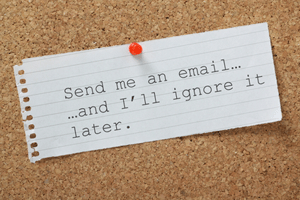
96. Seventeen hundred emails arrive loaded with one or two sentences apiece, each one containing a shred of an instruction for a paper. I'm juggling dozens of projects sometimes, and I have to keep track of this random stuff too? Please, people, put everything into one email. How hard could it be?
95. The staff where I freelance sometimes tells me that I need to redo a section of a literature review because three of my sources were too old. DAMN - she's right. How could I have missed that? Well, again, this time I can only blame myself. Gotta do that first thing.
94. A client wants to bond with me over the fact that my last name indicates a grandparent who grew up in her native country. I'm not looking for new friends, folks - just a growing list of clients.
93. A client curses me up and down the block and back again when he thinks I have not sent his paper to him in time. When I prove that I have, in fact, done so, he tells me he's stressed out, which is supposed to be an explanation. Like, it's my right to scream at you because my life is hard. Helping students cultivate grace under pressure might be a nice addition to our school curricula.
92. My favorite staff person - the one who looks out for me the most - asks me in her nicest email voice if I could pretty please take on a late job that another writer botched. I am really busy and I really shouldn't, but of course I do. No further explanation necessary.
91. A client who has a minimal grasp of English gives me a long list of sentences he deems incorrect simply because he can't understand them. Then I need to spend time explaining each one. Come on now - if you wouldn't do it to the plumber, why are you doing it to me? Ask the writing center first, please.
90. Clients in other time zones who can't do the conversion correctly and then blame me because their work is late generally end up contrite, but they tend to be extremely combative until the situation has been cleared up.
89. I'm getting to the tail end of a long paper when the client sends me late-breaking information from her instructor that completely changes everything. Even if I will be compensated for the additional work, the whole thing feels galling.
88. Many clients assume I care deeply about their personal lives. Don't get me wrong - I'm as happy to engage in chit-chat as anyone else in a professional setting. But when it comes to the down-deep details of family, love, and disease, well, I tend to think some things should be kept confined to very close friends. Call me old-fashioned, but it's how I feel.
87. Along those lines, consider a client who is not only getting married, but wants me to engage with her in exclaiming over every last detail of the planning process. In a word: ugh. Not all of us have dreamed of this moment since we were a little girl.
86. I always appreciate the client who wants to know how he can write as "good" as I do. Honey, at this point if you have to ask, it might not be worth the effort. More seriously, this is why we are here - because everyone in the world is not an excellent writer, just like everyone isn't a ballet dancer.
85. Clients who use clearly fake names and email addresses created just for this purpose amuse as well as annoy me. I have nothing to gain from exploiting the truth about your name and whereabouts, truly. If hiding makes you feel better, John Smith, I understand, but I'm not the FBI.
84. It's always a bit aggravating when a client asks me to explain the particularly brilliant analysis I've just performed in the course of completing her project. It's hard enough to write the stuff, but to have to type out whole explanations on top of it is a bit much.
83. I never know whether to be annoyed or amused when clients believe that academic writers all sit in warehouses somewhere, typewriters in front of them, ready to churn out the papers. I'm not being facetious - some people really do believe this.
82. The same client who insists I get back to him within a few hours at most, 24/7, 7 days a week, tells me he hopes I've had a restful and enjoyable weekend. Yeah. When would that have happened?
81. A staff person at one of the companies where I freelance keeps sending me jobs that are completely outside of my interests. Why, oh why, do you want me to keep telling you no? And why, oh why, do you guilt-trip me when I do? Don't you want the client to have a writer who knows what she is doing?
80. Clients who swear that my attachment is corrupt because they don't know how to open it - clients who swear my website is not working because they don't know how to fill out the form - clients who otherwise cannot use modern technology but refuse to admit it so they blame everyone else for their own lack of knowledge - these are among the more annoying folks I deal with.
79. A client who promises me a big tip for doing a good job might seem like a swell guy - and I do appreciate the occasional tip - but come on. I'm going to do a good job anyway.
78. Many times, clients are not as well organized as might be ideal, and so they forget things like the fact that drafts are due early, or progress needs to be shown over the course of the writing of a thesis. However, they remember real fast when their instructors ask them for whatever it is they've forgotten. Then, of course, it's my emergency. Sigh.
77. It's always challenging when clients have their parents or buddies "proofread" my work and then send it back to me. Going from error-free to error-ridden in one day flat. Gotta love it.
76. Along those lines, here's one of my favorites: clients who alter the model papers they receive, as they are supposed to do, make errors, and then lay those errors on my doorstep. Sorry, guys. I just don't make those kinds of mistakes, any more than a car mechanic would put maple syrup in a gas tank.
75. Here's a fun one. Some clients send me project requests with ample time in which to do them - say, two months for 50 pages. When I send the quote, I hear nothing back. Three days before the thing is due, I get a frantic email begging me to please help, they were scammed by a cheaper company, and now they have run out of time. If I wanted to scam these clients myself, I would tell them sure, I can get that done. But come on. It's just not possible, no matter how persuasively you beg or how much money you offer me. (To a point.)
74. A client who wants to know my personal opinion of her thesis topic is always a tricky situation. In general, I have a strict policy of non-disclosure; the sheer range of topics that I encounter is such that I am bound to come across projects which I find concerning or even downright offensive from time to time. The best way to avoid having to lie is refusing to say anything at all about any of them. That part isn't annoying - what is annoying, however, is the client who won't take no for an answer. Sorry, dear - you need to find affirmation elsewhere.
73. When 20 year old frat boys want to flirt with me on the phone - not guessing I'm a middle-aged woman - I am never sure if I'm more annoyed or repelled.
72. Being asked what city I'm in, what I'm doing the next night, and whether or not I ever meet my clients - these and other, similar, situations hold great potential for annoyance.
71. Also, it does nothing for my day to be asked what I look like, am I the girl in the photo on my site, and what am I wearing. Believe me, you do not want to know the answers to these questions.
 70
70. The one time I forget to block my phone number is the time I talk with the client who needs his hand held seemingly to do everything from tie his own shoes to send me the necessary information to complete his project. Can anyone say phone stalker?
69. Interestingly, those are also the clients who tend to want to call me at 4 AM, gosh golly forgetting the time zone difference, just to see how the paper is coming along.
68. Certain clients who ask me the same barrage of questions, apologizing all the way because "I've never done this before" and "I'm just scared I will get ripped off" seem to think they are among the Savvy Ones, a small elect group that knows to ask the right questions. Sorry, folks - lots and lots of clients have these same exact questions which they ask in pretty much the same exact order.
67. How many times have I told a client I will not violate their confidentiality? About twelve thousand gazillion.
66. Again with the phone issues (I told you, we writers are a reclusive group): why is it so hard for so many clients (OK, it's almost always males here) to keep the conversation within professional boundaries? Yes, my name is pretty, and I do love spring, but that has nothing to do with e-commerce in Malaysia.
65. Yes, you do have to pay before I do the work. Are you insane? Does anyone ship out anything to anyone ever before it's paid for?
64. Sometimes things run late. Computers break down, there are power outages, workloads get a bit out of control - whatever. Things happen. When they do, it's especially aggravating to be pushed pushed pushed by a client to meet a deadline, only to be told a day or two after I send it (only a few hours late, for which I pulled an all-nighter) that it wasn't really the deadline, and could I make 100 changes to the paper and by the way you have another week in which to do it.
63. What I really love are clients who ask for a quote and then decide they cannot go through with the project. Instead of saying no thanks, or simply not responding, these clients need to tell me what a horrible person I am, and what a horrible business I'm in, I presume as a way of easing their own guilt for even contemplating such a thing.
62. No, I can't help you get a job as a freelance professional writer.
61. Sometimes a staff person will tell me to go "above and beyond" for some special client or other. I always feel like I'm ten years old, being told by my mother to smile at the nice man who's going to give my dad a promotion. Give me a barf bag, please.
60. Why is it always the worst weather, the most horrible day, when the internet at my home office goes on the fritz? I gotta put on real-person clothes, get in my real-person car, and leave my lovely cocoon to find an internet cafe somewhere. It's one thing when I do it to have a change of pace, and another to have to leave the comfort of my home office just to get online. Have I mentioned we're reclusive?
59. Even though I know full well, after 15 years in this business, that there's an ebb and flow in terms of how many papers there are, it still catches me off guard sometimes. To the point: the height of the spring busy season drives me nuts, and the height of the summer slow season drives me nuts.
58. As hard as it may be to believe, little first-year college student who somehow knows everything already, I've addressed the same prompt for Othello about 48 times in my career. I do think I can handle it.
57. Speaking of handling, I find it interesting as well as annoying that so many clients are shocked that I can't write code in Thshisdfg A555$ software, and equally shocked that yes, I know who Flannery O'Connor is.
56. I get annoyed with both of these situations: when a writer to whom I sub-contract a paper tells me a sob story every time a paper is late, expecting me to care, and when a writer to whom I sub-contract a paper powers through horrible emergencies to keep churning out the work. Why these contradictory situations both annoy me probably says more about me than about them, though.
55. It is highly annoying when people do not think I work for a living because I sit on my ass and type all day. Trust me, I've seen hundreds of people try - and fail - at this job.
54. While model papers are a very helpful tool for students to learn better how to complete their own projects, they are far from guaranteed in the constitution. Please don't tell me you can't pay for your paper because you are a student which of course means I'm supposed to feel bad for you and drop the price. Almost all of my clients are students. This is a service that goes above and beyond what is offered in school, sort of like Kaplan goes above and beyond - and just like Kaplan, I'm not free.
53. No, you cannot get that 200-page dissertation in 5-page segments. Just ain't gonna happen.
52. Screaming fights on email (and sometimes by phone) to argue over what are, and are not, mistakes are some of my happiest moments (to be read with biting sarcasm). It is phenomenally annoying to have to explain, over and over, that "yours" does not have an apostrophe, and why not. I'm serious. I have three advanced degrees, 35 years of professional work experience (15 as a writer) and taught English in community college for eight years. You're going to argue with me about apostrophes?
51. I love it when clients want to know if I still have the articles from their literature review which I did six months ago. Yes, sweetheart, I keep everything on my computer forever from every paper I've ever done. Gosh, maybe that's why it keeps breaking down.
50. While I certainly don't share the details of my personal life with my clients, I also find it stunning that so many clients seem to think I don't have one. That's all. Just saying.
49. There are some clients who believe I should be able to whip out a 150-page dissertation in two days, and other clients who think I can't possibly handle a third two-pager in the span of a week. How does that happen?
48. As cantankerous as I am, I do try to be fair and objective when evaluating disagreements, in particular between sub-contracting writers and clients. As go-between, I do my best to see where the fault is, whoever has committed it. I don't take sides, in other words. I find it therefore especially galling when writers assume I will be on their side no matter what, as well as when clients assume I will not be on their side, no matter what.
47. Some clients are bound and determined to be unhappy with what I write, no matter what. Issue after issue is brought up, and no sooner do I explain or justify one when they find another. If I make a mistake, I am the first one to apologize and correct it. But it isn't a mistake when I don't write the exact same paper that you've imagined in your head.
46. Clients, when you write to me after four years and ask if I can send every one of the 39 papers you purchased from me oh, starting six years ago - well, that's annoying in anyone's book. I mean, do you actually still need them now?
45. For the most part, it's great to be able to have contact with other writers, staff at other companies, and clients through email only. I'm reclusive, remember? But every now and then it's annoying to have to type everything out if I want to have a conversation about the weather, just after I've typed out 15 pages of prose for a thesis I'm writing. Oh well - this is an annoyance I can gladly live with.
44. When a client wants to pay in pounds or Canadian dollars, I find that annoying. First, because I'm based in the US, my work and company and freelance sites are based in the US, and so that's the money I use. Second, because I suspect they only ask to save money, since it isn't like PayPal doesn't convert the amount automatically.
43. If I have to call my internet service provider due to a service outage, I'm treated like a baby with computers - or, more like it, as if I'm an ancient relic who fears computers. Please, people - I already restarted the modem, rebooted my computer, and did all those other things at least twice long before I called you.
42. I know you mean well, but I don't need to be blessed, or told to have a blessed day. You have your beliefs, I have mine.
41. Can I call you now, you write at 1:06 AM? No, I cannot call you. I can't call you right now either. I also pretty much can never just call you now. Has anyone heard of the concept of giving someone a range of times in which to call?
40. A client who emails, frantic, because her instructor does not believe she has written her own paper causes immediate annoyance. You have misused the paper I created for you, and now I have to deal with your panic over the matter?
39. Clients who hear the cockatiels in the background when I'm talking with them sometimes want to embark upon lengthy monologues in which they detail just how much they love animals, and how many cats they have. Please refer back to earlier entries that explain just how annoying this sort of presumed desire to bond can be.
38. I love it when clients send random emails with cryptic subject lines, adding information to their (anonymous) projects - or, better yet, when random faxes come in with no order numbers, no titles of projects, not even a name or email address. I think some clients believe we only work on one order at a time....
37. I work with live chat functions upon occasion so that clients can discuss their projects with me in real time. Apparently, some folks believe I do nothing but sit and wait by my computer, given that it can take 15 minutes for them to answer my questions. Look, guys, you chatted me.
36. I find it uber-annoying when clients send password-protected files without the passwords, and then get irked with me when I ask for the passwords, like I'm trying to pry into their business or something. Making matters worse, clients who tend to do this also tend to not check their emails very often, so such projects often end up being completed toward the final hours of the deadline stretch - sadly, the client's inattentiveness doesn't always translate into fairness for the writer.
35. I get the occasional client who implies - and sometimes directly states - that he will slander my name, take back his money, and otherwise do whatever he can to hurt me if he's not 100% completely satisfied with my work. And this is before I've even sent a quote. I don't know about other business people, but I don't tend to work well under threat of professional ruin.
34. Occasionally, another writer at one of the companies where I freelance will fill in for a chapter or so on a longer project that I'm doing. For example, the staff needs someone to do a rush job - I'm the only one who can do it, but I have a deadline on a dissertation - so the staff will find a fill in. That's all well and good. The annoying part comes when the fill-in can't write her way out of a paper bag.
33. Everyone wants a deal. I get that, I really do. But come on. Do you really think that if you tell me to reduce the font size to a grain of sand, or single space the entire paper, or otherwise make it so more words have to be written to fill a page - do you really think I'm not going to notice?
32. Halfway through a large thesis, the client dumps a bunch of required articles in my lap. Not so bad, you say? Well, they're in French. Can anyone say "four years of Russian in high school and don't remember a thing?" Moments like this are why I have learned to count to ten.
31. When a client is particularly nervous about enlisting my services, I usually offer them a trial page or two, just so they can see what I'm capable of without their having to make a large investment of time and money. I'm always happy to do this, but I am never happy to answer the occasional harsh accusation that I haven't "written enough" or "focused hard enough on my project." It's a free sample, people. What do you want?
 30
30. This one's a toughie to explain. When you use your credit card and it doesn't go through, your online statement will make it seem that it DID go through. This is called an authorization, and it will go away in a few days. Then you know how you try your card again and again until you are sure it won't work? Yep - you got it. Every time you do that, another authorization shows up on your statement as another charge. But these are not charges, and they will disappear. Well - all I can say is, try explaining that to an irate client who thinks I've cheated her out of hundreds of dollars with several erroneous charges.
29. Even though I try not to be aggravated, I don't always succeed when clients get cheap-assed prices from other companies and then want me to match them. Do these people go into Saab dealerships and demand they meet Kia's prices? They are cheap for a reason. I'm priced on the higher end for a reason. Don't expect a satin ballgown for the price of a t-shirt.
28. No, you can't visit me if you happen to be visiting the town where I live. No, no no no no.
27. Along those lines, you do know that we all work out of our home offices, don't you? Remember item number 83? Not only are we not all chained to desks in warehouses, but we're not even leaving our homes, for the most part. Why not? Isn't that one of the perks of telecommuting?
26. Here's an annoyance that has nothing to do with clients or staff of any kind. Working at home means just that: We are WORKING. At HOME. Working being the operative term here. Friends and family, please do not mistake my writing papers for liking things on Facebook, chatting with a friend, or doing anything else. It's a job.
25. Friends and family can be annoying in other ways. Oh, so you get paid to do what? Write? Are you kidding me? Yeah, Uncle Ted, you're right. Anyone can do it - even you, with your firm commitment to semi-literacy.
24. Yes, plagiarism detection software will pick up and flag quoted material, even when it is cited properly. No, that does not mean it's plagiarized. Repeat as needed until client understands.
23. Speaking of plagiarism, I'm going to sneak in one of my favorite lines (which I did not write): Your procrastination is not my emergency. So you forgot to send me that feedback I needed to complete your project until three hours before the thing is due. I get it. But your panic-laced invectives won't make me accomplish the impossible; all they will do is make me seriously annoyed with you for yelling at me because of something you did.
22. I've been known to become quite annoyed with some of my fellow writers who insist upon viewing our clients as children. You know: they feel the need to nurture, to take care of, to help them in that way. Seriously, people. We are not their parents. We are professionals, contracted to assist with our clients' educational experiences. We're not their mentors, their big brothers or sisters, and certainly not their proxy moms and dads.
21. Every now and then, a client will ask if I'm a professor at her school. One would think she would be pacified by hearing that I'm not a professor at her school. But no. She needs to know if I know anyone at that school, was I ever there, will I ever go there, etc. etc. etc. Sweetie, if you are that scared simply talking with me, perhaps this is not a good idea.
20. As a rule, I'm quite annoyed with drama. I don't care if it's a client, a writer, or a staff person, but it seems to me that most people don't agree with me. They seem to like drama. And I hate it, And boy, difficult projects with difficult deadlines do offer a tremendous amount of opportunity for drama. Sigh.
19. Please don't make a laundry list of all of your personal tragedies, illnesses, stressors, and so forth, and then use that list to ask me for a deep discount. While I appreciate that you are having a hard time, we all have these issues in our lives. That doesn't mean the oil man will bring my fuel for free, or the grocery store will give me 10% off my food. So why does that mean I'm supposed to discount my hard work for you?
18. No, I will not "just get started" on your 100-page dissertation while we all wait for your funds to arrive.
17. Yes, that is true even if I've worked with you for three years now. Nothing personal, but things change. How do I know your boyfriend/mother/whatever won't have a crisis and need some cash? Then it's bye bye thesis. So we'll just have to wait.
16. I just looooooooooove it when ten minutes after she makes her payment - a payment based upon a quote which I provided according to her specific instructions - a client sends me "new and improved" instructions. Inevitably, these new instructions call for an increase in price, given that they inevitably carry with them an increase in work. And inevitably, the client is shocked and astounded at this.
15. Few things are as aggravating to me as when I'm at the height of busy season, frantically pounding out word after word, when a client blithely wants to know can I move up his deadline by "just a few days." Are you kidding me? Honey, you'll be lucky to get it five minutes early.
14. Academic writers create model papers for our clients. We don't get good grades for our clients. If you are a client, please remember the difference.
13. I appreciate it very much when clients order multiple papers. I really do. But all too often, they forget that organization is critical to this business, and pile three or four orders into one email - this followed by random attachments with cryptic notes explaining which attachment belongs to which assignment. Let's get one thing straight: one order form = one assignment = all attachments at once, all together. How hard is that?
12. The last thing I need, when I have 150 emails to answer, is to have to stop and fill out a form with a capcha code just because some client has whitelisted my email address. Please - if you're doing business with me, then stop guarding your inbox against me.
11. Along those same lines, I can feel my blood pressure begin to boil when clients tell me I haven't sent them their papers when I know I have. Why don't they have their work, then? Because my emails have gone to their spam folders and they gosh darn it didn't realize it.
10. This makes me especially annoyed because most of my clients were born and raised in the internet age. They should know better.
9. No essay writing service is going to assign a group of its top writers to your Very Important Dissertation. What do you think this is - the operating room at Boston General? It just doesn't work that way. One writer, one project.
8. The same client who insists he's a genius is the one who's using an ancient version of Internet Explorer - old enough to be incompatible with the order form he needs to fill out to request a project. Time to upgrade, baby.
7. No, I will not Skype with you about your project.
6. Some topics are just plain annoying to me. There, I've said it. I'm only human. Some things interest me, and others don't. I try to engage with everything with an open mind and try to wring whatever I can from it, but at times, I just can't swing it. In those cases, every sentence is one big annoyance.
 5
5. I'm a day person. There, I said it. That's like saying you're a math whiz to a roomful of frat boys, but it's true. So it doesn't get too much more annoying than when sub-contracting writers can't seem to get me their papers before 1 AM. Sigh.
4. Here's one that has nothing to do with clients, writers, staff, family, friends, or anyone else - anyone other than dissertation review committees, that is. Can there be anything worse than a professor who "corrects" my writing and renders it "less correct?" How about professors who don't know APA style? Or who change their minds every ten minutes? It doesn't matter that I get paid for revisions - what matters is the aggravation of having to follow the lead of someone who doesn't know what he's talking about.
3. PayPal takes fees for every payment I get. Fees add up. That's annoying.
2. Carpal tunnel, man. There's an annoyance with no person to attach it to. Lucky for all of us writers, the surgery is easy, fast, and does the trick.
1. And finally: I've been annoyed for years that the Irish client with the gorgeous voice never invited me to Dublin for a visit. What? Writers are people too, you know.
------
Brought to you by FreelanceEssayWriters.com 
