
Apr 05, 2013 | #1
Terms You Need for Writing about the Novel
Although these terms sound most at home in film studies, they are nonetheless a very prominent and indispensable feature of literature, especially the novel. Many people feel that they know precisely what defines these terms, especially flashback, because it is so common across various media; however, knowing the precise range and specific manifestations of each of these terms in some detail will prove very useful in novelistic analysis.
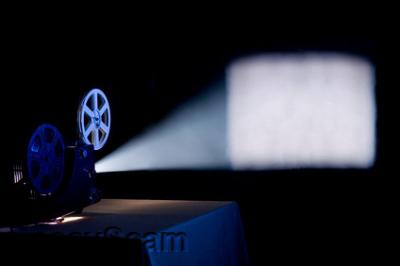 Flashback has been made most obvious in films, and as the name suggests, it is often preceded by a flash of bright light (often overlapping a close shot of a character's face), indicating that we are entering the mind of an individual. This is a way to border the events which occur in the flashback from those of the dominant narrative, helping the audience to know that what they are presently being shown is in the past, and potentially in a completely different place. Another way into a flashback is through a dream, which is also conventionally bordered, this time by an unfocused shimmering region on the periphery of the screen. In the novel, since there is no opportunity to use a bright flash of light or other visual effects to clue the readers in to the device, authors sometimes employ obvious boundaries like a line of asterisks, or italics around the events taking place in the flashback. In both film and the novel, however, there are other far more subtle ways to indicate that a flashback is taking place, and at times flashbacks occur without any formal indication at all.
One excellent example of flashback before that name was even applied to the device occurs in Homer's Odyssey, where Odysseus, after arriving at the court of a helpful king, tells of his journeys up to that point in the story, going into great detail and making us at times forget that we are not in the present time of the actual story, but instead looking back on it. A very similar approach to the device is employed in Conrad's Heart of Darkness, as Marlow begins to tell a story within the main narration of the novel, and this comes to occupy almost the entire work, making us forget what we are reading isn't present time. Perhaps even more subtly, an author can present entire chapters of a novel as flashbacks, without ever informing us that these events take place in the past. This leaves it to us to reconcile the seemingly disparate chapters with the main action, and there is a definite sense of satisfaction which arises once this is achieved.
The flashforward is the flashback's younger, less popular sibling, and for good reason: since stories are told most often in the past tense, it makes sense to include other events from a more distant past in the recounting of a narrative. The tenses remain the same, and even more importantly, the events have already happened, so they can be reported. Flashforward, on the other hand, is far less natural because it must either be presented in the future tense, which is almost unheard of in narrative prose, or in the past tense from a perspective that is even further along in time than the events being narrated, which are already further ahead in time than the events of the main story. This is further complicated by the fact that future events do not exist in the same way past events do, and so flashforward most often needs to be centered on tricks like prognostication and time-travel. This device is most effectively employed in conjunction with flashback to create an uncertainty about the present time of a story, like in Tarantino's classic movie Pulp Fiction, which employs both devices so effectively that we are left thoroughly disoriented and unable to distinguish present from past and future, until the story progresses sufficiently to help us situate how the various episodes are intertwined.
Flashback and Flashforward
Although these terms sound most at home in film studies, they are nonetheless a very prominent and indispensable feature of literature, especially the novel. Many people feel that they know precisely what defines these terms, especially flashback, because it is so common across various media; however, knowing the precise range and specific manifestations of each of these terms in some detail will prove very useful in novelistic analysis.
Flashback has been made most obvious in films, and as the name suggests, it is often preceded by a flash of bright light (often overlapping a close shot of a character's face), indicating that we are entering the mind of an individual. This is a way to border the events which occur in the flashback from those of the dominant narrative, helping the audience to know that what they are presently being shown is in the past, and potentially in a completely different place. Another way into a flashback is through a dream, which is also conventionally bordered, this time by an unfocused shimmering region on the periphery of the screen. In the novel, since there is no opportunity to use a bright flash of light or other visual effects to clue the readers in to the device, authors sometimes employ obvious boundaries like a line of asterisks, or italics around the events taking place in the flashback. In both film and the novel, however, there are other far more subtle ways to indicate that a flashback is taking place, and at times flashbacks occur without any formal indication at all.One excellent example of flashback before that name was even applied to the device occurs in Homer's Odyssey, where Odysseus, after arriving at the court of a helpful king, tells of his journeys up to that point in the story, going into great detail and making us at times forget that we are not in the present time of the actual story, but instead looking back on it. A very similar approach to the device is employed in Conrad's Heart of Darkness, as Marlow begins to tell a story within the main narration of the novel, and this comes to occupy almost the entire work, making us forget what we are reading isn't present time. Perhaps even more subtly, an author can present entire chapters of a novel as flashbacks, without ever informing us that these events take place in the past. This leaves it to us to reconcile the seemingly disparate chapters with the main action, and there is a definite sense of satisfaction which arises once this is achieved.
The flashforward is the flashback's younger, less popular sibling, and for good reason: since stories are told most often in the past tense, it makes sense to include other events from a more distant past in the recounting of a narrative. The tenses remain the same, and even more importantly, the events have already happened, so they can be reported. Flashforward, on the other hand, is far less natural because it must either be presented in the future tense, which is almost unheard of in narrative prose, or in the past tense from a perspective that is even further along in time than the events being narrated, which are already further ahead in time than the events of the main story. This is further complicated by the fact that future events do not exist in the same way past events do, and so flashforward most often needs to be centered on tricks like prognostication and time-travel. This device is most effectively employed in conjunction with flashback to create an uncertainty about the present time of a story, like in Tarantino's classic movie Pulp Fiction, which employs both devices so effectively that we are left thoroughly disoriented and unable to distinguish present from past and future, until the story progresses sufficiently to help us situate how the various episodes are intertwined.