
Apr 05, 2013 | #1
Terms You Need for Writing about the Novel
Although there has been a turn toward realism which has dominated literary writing almost since the birth of the novel, fantasies about wonderful and terrible fictional worlds have never stopped captivating our imaginations. The roots of utopia and dystopia stretch back to the dawn of writing, and likely much further, as human populations have placed ideas of heaven and hell, the original utopia-dystopia pair, at the center of their religious mythologies. No mater how bad or good the conditions of a society are in a given place at a given time, it is always possible for us to imagine it being better or worse, and this is at the core of -opia writing.
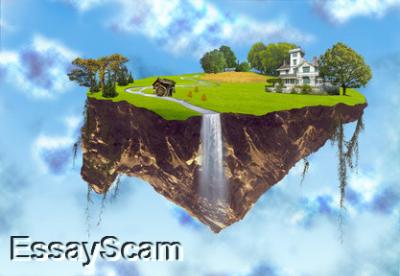 Although the idea for both of these terms has no definable start date, the terms themselves are much more recent. Utopia comes from the famous Latin text of that name written by Englishman Thomas Moore, describing the living conditions of recently discovered societies living in the new world (North America). These individuals are described in idyllic terms, with their primitive laws and customs being at once contrasted and compared to those of various European nations, which acts as a subtle parody and an effective (though highly indirect) satire. The term utopia has come to mean ideal place, or perfect land, but this is a slight betrayal of its etymological roots. Moore knew that eu was the right prefix to indicate that something was very good, but instead chose to call his novel utopia, employing the prefix u, meaning no or none. Because his work was also a satire, he was punning with the different prefixes, since his land was both an ideal place (in a way) and no place at all (because it did not really exist). This distinction was not really followed by those who coined the term in its modern usage, although it is interesting to note that many examples of utopia fiction do share the same satirical concerns as Moore's original.
Dystopia's history, on the other hand, is far shorter and far less complex. The term was conceived as a direct opposite to the term utopia, and did not enter the language until the term to which it was opposed had already become common in both popular and literary use. The dys prefix contains none of the interesting ambiguity of the prefixes discussed above, and only refers to something negative. Therefore, dystopia refers to worlds that are highly, horribly negative. Some of the most memorable and popular novels of the 20th century are dystopic, including Aldus Huxley's Brave New World, Ayn Rand's Anthem, and George Orwell's Nineteen Eighty-Four. Even more than utopic fiction, writing about dystopias tends to involve the creation of futuristic worlds, making them a commonplace in science fiction. The idea of a post-apocalyptic future, after a nuclear war or other totalizing disaster, is a common way to create a dystopia, and technology (or more often, the resultant lack on it) is often central.
Interesting effects are created when elements of both utopia and dystopia are presented in a single text, in a single world. In some of the examples of dystopia above, the worlds are first presented, from at least one perspective, as being idyllic, perfect lands where technology and strong government has resulted in the elimination of crime, poverty, and so on. However, as the novel progresses, we see that the price that has been paid for such a perfect world has been a large measure of what we consider essential to what makes us human, turning the seemingly perfect worlds into dystopic prisons.
Utopia, Dystopia
Although there has been a turn toward realism which has dominated literary writing almost since the birth of the novel, fantasies about wonderful and terrible fictional worlds have never stopped captivating our imaginations. The roots of utopia and dystopia stretch back to the dawn of writing, and likely much further, as human populations have placed ideas of heaven and hell, the original utopia-dystopia pair, at the center of their religious mythologies. No mater how bad or good the conditions of a society are in a given place at a given time, it is always possible for us to imagine it being better or worse, and this is at the core of -opia writing.
Although the idea for both of these terms has no definable start date, the terms themselves are much more recent. Utopia comes from the famous Latin text of that name written by Englishman Thomas Moore, describing the living conditions of recently discovered societies living in the new world (North America). These individuals are described in idyllic terms, with their primitive laws and customs being at once contrasted and compared to those of various European nations, which acts as a subtle parody and an effective (though highly indirect) satire. The term utopia has come to mean ideal place, or perfect land, but this is a slight betrayal of its etymological roots. Moore knew that eu was the right prefix to indicate that something was very good, but instead chose to call his novel utopia, employing the prefix u, meaning no or none. Because his work was also a satire, he was punning with the different prefixes, since his land was both an ideal place (in a way) and no place at all (because it did not really exist). This distinction was not really followed by those who coined the term in its modern usage, although it is interesting to note that many examples of utopia fiction do share the same satirical concerns as Moore's original.Dystopia's history, on the other hand, is far shorter and far less complex. The term was conceived as a direct opposite to the term utopia, and did not enter the language until the term to which it was opposed had already become common in both popular and literary use. The dys prefix contains none of the interesting ambiguity of the prefixes discussed above, and only refers to something negative. Therefore, dystopia refers to worlds that are highly, horribly negative. Some of the most memorable and popular novels of the 20th century are dystopic, including Aldus Huxley's Brave New World, Ayn Rand's Anthem, and George Orwell's Nineteen Eighty-Four. Even more than utopic fiction, writing about dystopias tends to involve the creation of futuristic worlds, making them a commonplace in science fiction. The idea of a post-apocalyptic future, after a nuclear war or other totalizing disaster, is a common way to create a dystopia, and technology (or more often, the resultant lack on it) is often central.
Interesting effects are created when elements of both utopia and dystopia are presented in a single text, in a single world. In some of the examples of dystopia above, the worlds are first presented, from at least one perspective, as being idyllic, perfect lands where technology and strong government has resulted in the elimination of crime, poverty, and so on. However, as the novel progresses, we see that the price that has been paid for such a perfect world has been a large measure of what we consider essential to what makes us human, turning the seemingly perfect worlds into dystopic prisons.