One of the best ways of learning citation styles in an academic setting is to go to your university library and study hard to learn it. I've written a short essay on my reflections on understanding libraries as institutions:REFLECTIONS ON CITATION STYLES
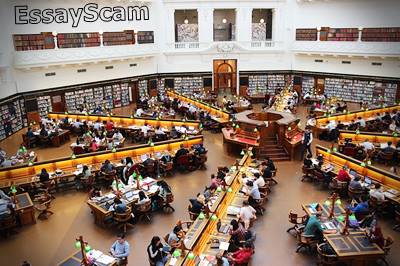
Through the readings and musings of these chapters, I feel like it does give us a better understanding and overall grasp of libraries as institutions. The structural breakdown of the historical aspects of libraries - from a space to facilitate higher thinking, to the collection of documented knowledge, and the changes in terms of public accessibility largely brought about by the advent of printing, to the emergence of the library sciences; all clearly aid in contribution to the finalized concept of libraries as organized institutions. Furthermore, a smooth transition in the literature addressing the changes brought about by technological advances from a computing perspective, and their due effects on today`s libraries, also for me, shed light upon the potential shifts in organization that would be necessary to appropriately accommodate and capitalize upon these new and powerful gifts of science.
I was especially interested in the censorship issue which was brought up. It had me looking into further readings on the subject, as well as reflecting on the validity of censorship based on societal pressures and the grey area it encompassed. To use for example, the situation of school libraries. On the one hand, there was the basic idea that institutions of knowledge had a responsibility to protect innocent young minds. However, I am forced to query, from what? Damaging information? However, information can only be damaging if it is misinterpreted, whether intentionally or otherwise. Even then, to take a broader perspective, the definition of adjectives such as "damaging" or "empowering", are going to be largely based on the culture or social setting, passing judgment on a given piece of material. This leads me on, to the other hand, where we need to question if we are giving our young people enough credit. Does the ability to think critically not require varying points of view, and an open mind regarding "right" and "wrong"?
The American Library Association (ALA) recommends a promotion of intellectual freedom. In my personal opinion, I do strongly agree on their stance against pre censorship and immediate removal of library materials based on an initial complaint. I am however, in two minds about the recommendation for not needing parental permission to view material that may be deemed inappropriate for certain age groups. In this case, I think that perhaps a parental guidance clause could be exercised, rather than expressly required; due to the varying levels of maturity when it comes to our young people. Overall, these readings from the textbook and their counterparts, have enabled me to reflect on the need for our education system to emphasize independent thought, analysis and reflection; rather than for our libraries to play watchdog.
The next chapter had me enjoying immensely, the section on the historical journey of libraries. It was also extremely interesting to read about physical libraries changing from a space for books, to a gradual progression towards incorporating technology as a facilitator of knowledge in the library environment; and even the advent of online libraries in cyber space, where a physical presence is not even required.
Further readings took me back to the ALA site where discussions on the role of the 21st century library, pointed to a very sound prediction - that while the physical library institution would continue to exist for users, their emphasis would change from a place where documents were kept, to a community based center to foster collaboration and communication, whilst at the same time, offering visitors an entry point to a network of digital materials and services, thus maintaining their relevancy in a cyber-age. That a pessimistic outlook regarding our future libraries is unfounded.
As this step by step progression incorporating new technologies takes place in public and school libraries, one is forced to wonder on the issue of censorship in this context and the increasing difficulty in doing so, as information, regardless of quality is uploaded online at an incredible rate. On top of that, Rubin also brings forth the issue of deception and how the ease of indulging in it, in an electronic environment makes it both widespread and to a large part, undetectable. The first thing that comes to mind in terms of a school library situation, is that of plagiarism. This is a serious issue that we as librarians and keepers of knowledge should consider. As technology advances, so will the tendency for misuse of it, and thus the operations to combat this.
Finally, I was very intrigued with the rise of wikis, blogs and e-books. Through the readings, I was compelled to search up a wiki on libraries and to my surprise, it existed in the form of WikiBooks - "open books for an open world". While use of wikis and blogs have been long admonished in the realm of scholarly writing and academics due to their openness to information reconstruction, and claims without citation, we are unable to ignore their very real presence. The interesting part here that yet remains to be seen, is how the library institution is going to reorganize to fully monitor, incorporate and take advantage of these powerful modern tools.
References:ALA. School Library Media Centers and Intellectual Freedom | American Library.
Rubin, R. he Library as an Institution: An Organizational Perspective. In Foundations of Library and Information Science.
WikiBooks. Introduction to Library and Information Science/Technology and Libraries: Impacts and Implications. 