EssayScam ForumEssayScam.org
Unanswered      
  
Posts by EW_writer / Posting Activity: ☆☆☆ 441
I am: Unspecified / Burundi 
Joined: Jul 02, 2007
Last Post: Sep 20, 2012
Threads: 21
Posts: 1981  
Displayed posts: 1666 / page 1 of 42
sort: Latest first   Oldest first   |
EW_writer   
Sep 20, 2012

i'm taking graduate courses, but i'm mostly self-educated. i have a bachelor of arts from a decent public university though.

Then I don't think you should communicate to potential employers that you work at a masters/phD level. If you're asked about it in an interview and you claim to provide "advice" to masters/PhD candidates, the next question would most likely be what makes you qualified to provide such advice.
EW_writer   
Aug 29, 2012

I'd like to thank the mods for granting my request to have off-topic posts deleted. ^_^

There are other reasons why a good company may be on the DND list.

If you mean fake complaints, that can be resolved by having complainants present order numbers as proof. This was done some time ago, and one company got so overwhelmed by the amount of legitimate complaints that came out against them that they ran to the DND list for cover.
EW_writer   
Aug 23, 2012

This forum maintains a list of companies that do not want their business discussed here. This is called the Do Not Discuss list, but it is really more appropriate to call it the Do Not Deal with list. Why would you want to deal with a company that demands for this forum to block out the posts of every one their clients who come here to complain?
EW_writer   
Aug 22, 2012

I think you're overestimating potential customers' intelligence and patience, EW. I would wager most of them don't know the DND list exists.

Perhaps, that's why I think it's part of our social responsibility to make sure they know that such a list does exist. ^_^
EW_writer   
Aug 20, 2012

On the contrary, I think that the DnD list makes outing scams easy. If a company is on the list, it at least means that the company has had enough issues with clients and/or writers on this board for them to not want clients/writers to share their experiences. This should be enough for prospective clients to be wary of ordering from these companies. Of course, this does not mean that clients should immediately trust companies that are not on the list.
EW_writer   
Jul 26, 2012

I wanted to see which company the original poster was pimping.

It was the company made of animal teeth and tusks. ^___^ The company has tons of complaints from various posters who DID provide order numbers. Out comes this loser (imogen) who thinks that posting phantom experience can undo the terrible image that the company has already developed here. Tsk tsk... ^_______^
EW_writer   
Jul 26, 2012

People who believe s-i* like this deserve to be scammed. I am not for any of the companies identified above, but unless the poster can provide order numbers and the actual outputs (they were, after all, for reference purposes only), there's no reason for anyone to think that anything he posted is true. ^___^
EW_writer   
Jul 24, 2012

same old dead horse, too...

Correct. At present, determining whether or not a company exclusively hires native English speakers is both impossible to determine and irrelevant to the issue of quality. Even companies allegedly based in the U.S. have been suspected of hiring ESL speakers. I think that the reason why one nutcase was recently banned from this forum was because he inadvertently admitted that the company he was defending also did the same.
EW_writer   
Jul 15, 2012

You were always thick as thieves with WB, Pheel-up and the gang from SNR/DND, always quick to back them up when one lied and the other swore to it.

Not always.

meoKhan- Until you can learn to write a grammatically correct sentence, which is something for which objective standards exist, I am done debating this with you.

The majority of your posts are incoherent and senseless.

/forum/ot/meokhans-endorsements-2845/ [requires login] - MeoKhan's endorsements

editor75 eloquently described Meo's condition somewhere in this forum. However, I'm too busy to look it up. I remember it had something to do about people breaking after being put through too much agony by their tormentors and ending up as docile, drooling idiots.
EW_writer   
Jul 05, 2012

These are all just silly ridiculous online games

I agree. You're not playing it so well though. :p

Satisfied Customer

Anyone who believes this without sunshine11 posting any verifiable proof of his/her identity, university, and order details is a fool. ^_________^
EW_writer   
Jul 05, 2012

So please desist from inferring that I am lying on this forum as I have no need to.

You are lying. Why shouldn't I say it as it is?

What did other members have to say about your site? Let's see...

Was the proper response to these posts making up accounts and having them pose as customers/writers? No, yet that's what you did anyway.
EW_writer   
Jul 04, 2012

Pull out BS and propaganda of half educated with weak degree.

Now you're sounding like WB*.

Obviously, I'm asking all this rhetorically, because it's just not remotely believable that you're here without a financial interest in this industry

Do you point this out every time it's true, or just when it happens to be true about someone who's attacking you?
EW_writer   
Jul 04, 2012

My name is Karen Oliver and I am the owner of Critical Proof Limited.

You can "confirm" it all you want; it still shouldn't be worth **** to potential clients reading this thread.

These are actually verifiable people - if you click on their names you can contact them and they can verify who they are, so actually they are verifiable.

Riiiight... so real students who ordered from an essay mill would go online in some anonymous board and be willing to disclose their personal information to anyone who comes asking, do you think that potential clients reading this thread are morons?

I dont need to "pay someone" to make up positive remarks about my company.

Of course not. I'm sure that you can "make up positive remarks about (your) company" well enough on your own. ^________^

I note that EW Writer has written over 2000 posts, clearly a paid forum writer/troll etc.

...are you saying that people are better off believing members who have 2 posts or less?

I never said anything bad about the quality of work at your company. My point is that this crappy marketing strategy (of making several accounts and using them to pose as customers, writers, etc.) that many upstarts who just can't get any clients pull in hopes of attracting potential clients from this forum is so ridiculously obvious and just plain tacky.
EW_writer   
Jul 03, 2012

Once again, potential clients who are gullible enough to fall for the crap written on this thread are the only losers. If you want to try this website, you are free to do so, but you're a fool if you decide to try it just because a few posters who claim to be writers and customers of the website shared their unverifiable experiences.
EW_writer   
Jun 26, 2012

Again, none of these discussions are worth anything. The only threads that matter on this forum are those that expose the questionable practices of companies, writers, and clients, foreign or not.

WB giving these guys a mouthful...

WBulls-i* is no better than the jokers on this thread who are trying to prove that foreign companies are better. Where quality of writing is concerned, the location of the company (or the writer) remains a non-issue.
EW_writer   
Jun 26, 2012

SPECIAL THANKS TO: EssayScam team for removing bullies from the forum and allowing civilized discussions again.

None of this self-promotion is worth anything. If you people think that just because WBulls-i* was booted from this forum, stuff like this is going to seem more believable to readers, you're kidding yourselves.

This "industry" is all about quality. There are bad foreign companies just as there are bad "American" companies. Giving empty reasons why one is better than the other won't make it so. Let's let this forum stay as a place where people can openly express their grievances against companies, writers, or clients.
EW_writer   
Jun 20, 2012

IMO, all companies that are discussed here benefit either indirectly, directly, or both:

That's true, which says much about the companies that are on the DnD list. IMO, clients should think twice before hiring the services of companies that cry foul when disgruntled clients complain in public.
EW_writer   
May 07, 2012

it doesn't matter whether you "defeated" Klosegoal's argument or not; you still led off this thread with an ad hominem,

They teach this in Logic 101, WB; you should have listened. Also, how can you defeat Klosegoal's argument "in another thread" when his argument is about the opening post? Even your excuses need excuses. >.<
EW_writer   
May 07, 2012

He doesn't HAVE a legit argument,

He said that this was an ad hominem:

Klosegoal, you're a worthless, lying, pathetic.

That's his argument. Your response was:

Wrong. The proof is in other threads. He's a moronic competitor.

Which shows your ignorance of what an ad hominem is and what it is not.

I'm not defending rusty; I'm just pointing out your ineptitude.

Still want to claim that your statement wasn't an ad hominem because you have "proof" that Klosegoal is a "worthless, lying, pathetic piece?"

Term Paper fast wrote me a decent research paper.

no order number = delete

EW_writer   
May 06, 2012

Wrong. The proof is in other threads.

It's sad when people don't understand what an ad hominem attack is. >.< It's still ad hominem even if there is proof that the person is what you claim he is, dimwit. What cockamamie community college did you graduate from?
EW_writer   
May 02, 2012
General Talk / threatening a customer or not [190]

One more time, if you have a definition of "direct proportion" and "direct correlation" that agrees with your interpretation, please provide them.

There is nothing wrong with the definitions. You remain unwilling to accept that in research practice, when two variables are found to be correlated, an equation of direct proportionality is derived from the relationship.

Here's a question. Can you give me two practical variables that you believe are directly proportional (that is, you think that their correlation is perfect)?

Also (and this is a slightly different topic, centered on your flawed understanding of what misuse of statistics is),
EW_writer   
May 02, 2012
General Talk / threatening a customer or not [190]

That isn't the complete definition.

Again, no, it's not. You keep choosing words from the definition and claiming that somehow, those words prove your point but they don't. A direct correlation, measured by Pearson's r and used in the studies I quoted, is an expression of linear correlation (not quadratic, or cubic, or exponential, etc.). When two variables have a linear relationship, it means that they rise and fall together in a constant ratio. That's why the equation they yield is one of direct proportionality.

No, it isn't, and there's no "imply" about it--that's the definition of a directly proportional relationship. You say I found the right definition, but it doesn't seem like you read it.

Sorry, but this is going nowhere. I understand what you are insisting, but it simply does not work that way in practice. You can't draw perfect correlations from empirical data. You can only draw significant correlations. However, regardless of what correlation you draw, the regression equation that you end up with is always a linear equation, an expression of direct proportion.

Here is the graph of two variables that are linearly (directly) correlated.

Highly correlated

Here is the graph of two variables in direct proportion.
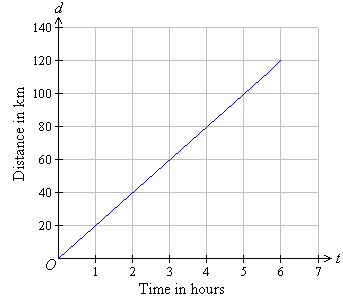
Direct proportion

Here is a graph of a simple regression analysis, in which the resulting equation is not derived from a perfect correlation, but the equation of the graph is nonetheless a linear equation that plots the two variables in direct proportion.
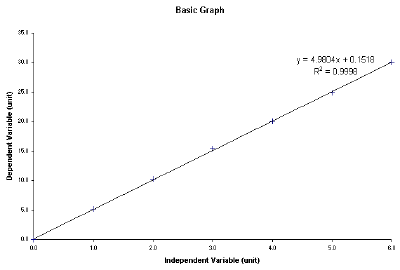
regression

Yes. Your analogies are all kinds of wrong.

Really? How is my analogy wrong? You said using known level of education to predict intelligence of an individual is a "gross misuse of statistics." I explained that in medicine, some variables (such as blood chem results, gender, etc.) are used to predict the risk that a single patient would have a specific disease. Education is to "some variables" as intelligence is to "risk of disease." That's my analogy. If you can accept the latter, why can't you accept the former?

You are suggesting that if we only now someone's intelligence, we can reasonably predict their level of educational attainment, and conversely that if we know someone's level of educational attainment we can reasonably predict their level of intelligence.

Yes, that's how correlation works. If the correlation is significant, we can predict one variable in terms of the other using an equation that expresses a direct proportionality between them. You still fail to grasp that I am not talking about causality here. If you give me a person and tell me his educational attainment, I can use the results from the studies I quoted (if I had them) to predict what that person's IQ likely is. Similarly, you can give me the IQ of the person, and I will simply reverse the formula and predict his educational attainment.

However, if you give me a person's educational attainment and have me predict his IQ, and then you have him take a higher degree (thereby raising his educational attainment), and then ask me to predict his IQ again, there is no guarantee that his IQ would rise because while the two variables are highly correlated and the equation used to predict one in terms of the other expresses them in direct proportion, causality is not implied.

In brief: Most dumb people don't pursue Ph.Ds. That doesn't mean all or even most smart people do.

That's your unfounded inference of causality. I have mine too (higher intelligence makes people pursue higher degrees). However, this has nothing to do with the topic on direct correlation implying direct proportionality.
EW_writer   
May 02, 2012
General Talk / threatening a customer or not [190]

I notice you switched back to "direct correlation" again--are you doing that on purpose, or are you legitimately confused?

I'm not switching anything. Again, the explanation is simple. First, the definition of directly proportional is right (x increases as y increases). Second, when 2 variables are correlated (not perfectly correlated because it's impossible to find this from empirical data), a linear equation can be constructed from it. This linear equation expresses a direct proportion. If you calculate the correlation of this constructed formula (which was based on the data), it would be perfect. Your insistence that two variables need to be perfectly correlated in the first place for research to imply that there is direct proportionality between them is WRONG. When we work with sample data, the correlation is never perfect (except maybe by extreme happenstance). However, we still end up with a "perfect" equation where the variables are directly proportional. Your position that there needs to be a perfect correlation between two variables before it can be inferred that they are directly proportional is wrong. In research, if we get say an r=0.8 (p<0.001), then we can say that the two variables are significantly correlated, and the equation relating them to one another (which is a linear equation and therefore an expression of direct proportionality) is reasonable.What about this explanation on why direct correlation implies direct proportionality (and vice versa) do you not get?

Using this to try to predict the intelligence of a particular individual based purely on a knowledge of their educational attainment represents a gross misuse of statistics...which I'm sure you know.

You still sticking to this?
EW_writer   
May 02, 2012
General Talk / threatening a customer or not [190]

It isn't wrong according to the definition I've found,

No, it's not. The definition you found is correct. When two variables are directly correlated, an equation can be developed to express this correlation as a direct proportional relationship between the two variables. The procedure is called linear regression, and is described in the following link.

stat.yale.edu/Courses/1997-98/101/linreg.htm

Before attempting to fit a linear model to observed data, a modeler should first determine whether or not there is a relationship between the variables of interest. This does not necessarily imply that one variable causes the other (for example, higher SAT scores do not cause higher college grades), but that there is some significant association between the two variables.

It would also mean that every unit increase in intelligence corresponds with a unit increase in education. And the research doesn't show this, and I don't believe you really believe this--every year of school adds the same amount to intelligence as the previous year? Really?

Yes it does, that's what correlation implies. This is how it works, you use the data to find the correlation coefficient. You check if the coefficient is significant and if its square is high enough to proceed to modeling. The model yields a linear equation, where one variable is made to be directly proportional with the other variable (y=mx + b, where m and b are the constants derived from the regression analysis). If this model is strong enough, it would be possible to reasonably determine how many units of education is increased by every unit of intelligence found in the sample.

One can statistically predict a higher intelligence level when selecting from a pool of Ph.D. holders than a pool of BAs, sure.

That's precisely what I am talking about.

Using this to try to predict the intelligence of a particular individual based purely on a knowledge of their educational attainment represents a gross misuse of statistics...which I'm sure you know.

No, it's not. Doctors use this logic all the time when constructing screening tools. Your risk to acquire certain diseases can be predicted accurately by different factors (age, gender, etc.). In developing a screening instrument to say, replace/supplement an invasive procedure (such as a biopsy), what we do is we try to find which factors are the best predictors (variables from blood chem tests, urinalysis, etc.), and then use regression statistics to assign scores to them. In this analysis, we are actually able to estimate how large each point of a certain variable adds to your risk of getting the disease.

Do employers use this same logic in determining how smart applicants are? Why should they when they have an HR department equipped with instruments that can measure IQ? An exact measurement is always better than a predicted one. Still, the difference between the salaries of undergraduates and graduates in the United States implies much about how employers value higher degrees.

bls.gov/emp/ep_chart_001.htm
EW_writer   
May 02, 2012
General Talk / threatening a customer or not [190]

I mean specific. As in, there is a wide range and ultimately infinite variability in the degree of a direct correlation, while there is one specific value that denotes a directly proportional relationship.

I see. You mean that if r=1, then there is direct proportionality. Otherwise, the relationship between the two variables cannot be in direct proportion. This is still wrong.

What causality has to do with the difference between direct proportion and direct correlation I do not know. Either you're confused or you're deliberately trying to confuse the situation.

You asked:

do you think that there's a directly proportional relationship between education and intelligence?

I answered:

Numerous credible studies point towards this so, yes, I am inclined to believe that there is a direct correlation between educational attainment and intelligence.

To which you replied:

We will assume, then, that you don't think education and intelligence are directly proportional--i.e. an increase in one would necessarily be seen to coincide with an increase in the other, and vice-versa.

My answer was and still is, yes, the two are directly proportional. This means that for "every unit increase in education there is some constant unit of increase in intelligence." That is what current research points out. There is direct proportionality between them, with some error. Were they found to be in perfect direct correlation/proportion in these studies? No, no experimental variables ever are. However, if you are asking if I claim that getting a graduate degree would make one smarter, no, I never claimed that. I actually stated that it was more likely the other way around, intelligent people tend to pursue higher degrees.

Either way, it still implies that one can statistically predict how intelligent a person is based on his highest educational attainment. Do you disagree?
EW_writer   
May 02, 2012
General Talk / threatening a customer or not [190]

A direct correlation is not as specific.

What do you even mean by "specific" here? Both concepts are well defined in mathematics.

Or, to use your own sources, only a perfectly positive direct correlation would be a directly proportional relationship. You are not asserting, I don't think, that education and intelligence have a perfectly positively correlated relationship. Are you?

If two variables are in direct proportion, then they are directly correlated. If they are in perfect correlation, then their proportional relationship is also perfect. If the correlation is not perfect, then the direct proportion between the two would yield some error. However, an equation denoting direct proportion (not inverse proportion, or direct square proportion etc.) would still be drawn. None of this is related to your flawed idea that when you say that education and intelligence are directly proportional, it implies that one causes the other.That's just wrong.

Direct correlation does not imply a directly proportional relationship,

It does.

Directly correlated <-> Direct proportionality
Perfectly directly correlated <-> Perfect direct proportionality

It's as simple as that. In fact, it may even be the case that the two variables are in perfect direct proportion, but there is no causality between them. For example, let us say that we found the number of ice cream sales and the number of suicides during different months in a town to be as follows (2,1), (3,4), (4,7). There is a perfect correlation here (r=1), and the proportion is direct and perfect (an increase of 1 sale leads to an increase of 3 suicides). So, does this mean that increasing ice cream sales would lead to more suicides? Do you get what I'm saying?
EW_writer   
May 02, 2012
General Talk / threatening a customer or not [190]

Sorry, but no.

...

I did not say that they meant the same thing. I said that one implied the other, and vice versa. If two variables are directly related, then they are in direct proportion.

Sigh...

A positive correlation indicates that the two variables move together, and the relationship is stronger the closer the correlation gets to one. A negative correlation indicates the two variables move in opposite directions, and that relationship also gets stronger the closer the correlation gets to minus 1. Two variables that are perfectly positively correlated (r=1) essentially move in perfect proportion in the same direction, while two assets which are perfectly negatively correlated move in perfect proportion in opposite directions.

http://pages.stern.nyu.edu/~adamodar/New_Home_Page/StatFile/statistics.htm

Also,

https://books.google.com.ph/books?id=nIE6idG8jFgC&pg=PA16&lpg=PA16&dq=direct+proportion+perfect+correlation&source=bl&ots=GQe3YSMCaE&sig=-AwodfmSq6SpFirgn79XSkmQDCo&hl=tl&sa=X&ei=yNWgT6_GNouyiQew_4X1BA#v=onepage&q=direct%20proportion%20perfect%20correlation&f=false

Dude, I actually write quantitative research studies on a regular basis. I know what I'm talking about. I don't see why you need to be pigheaded about this.
EW_writer   
May 02, 2012
General Talk / threatening a customer or not [190]

This would mean a direct correlation but says nothing about direct proportion.

Err... that's where your problem lies. If two variables are directly correlated, they are also in direct proportion. Correlation is the strength of the relationship while proportion is its size. For example, the variables in the ordered pair (x,y) described by samples (1,1), (2,3), and (3,5) are directly related with a correlation coefficient of 1.0. They are in direct proportion, with every 1 unit increase in x leading to a 2 unit increase in y.
EW_writer   
May 02, 2012
General Talk / threatening a customer or not [190]

There's our dispute, then. While this certainly can be the case, it isn't always, nor does the lack of a master's degree preclude knowledge about these technicalities.

Of course, I never claimed that it was always the case. I even qualified that the degree was only useful if the writer actually took it seriously.

That's not what I said, and you are more than intelligent enough to know that. Don't be disingenuous.

There's the problem. I already said that I don't believe becoming more educated adds to one's intelligence. However, this is not the same as saying that I don't believe they are directly proportional.

The problem here is that direct proportionality has nothing to do with causality. A linear relationship can be expressed as:

IQ = A1 * Education + A2, where A1 and A2 are some constants.

The question is, do I believe that such a relationship exists between Education and IQ? The answer is yes, I do. I do because studies clearly show that this is the case. That is, given the level of education of a person, it is possible to use the formula to predict what the intelligence quotient of that person likely is (and vice versa). This is direct proportionality. However, this does not mean that when a person takes on a higher degree, his intelligence will increase. That has nothing to do with direct proportionality between two variables.

A similar relationship exists between height and weight. They are directly proportional. However, this does not mean that if a person gets an operation to increase his height by a few inches (a la Gattaca), his weight would increase.
EW_writer   
May 02, 2012
General Talk / threatening a customer or not [190]

education has no effect on intelligence.

I am inclined to agree.

that intelligence rather than degree is a qualifier in this industry,

...and I say that both are important, especially since a graduate degree makes one much more knowledgeable about the different technicalities of quantitative and qualitative research writing.

I mean, do you think that there's a directly proportional relationship between education and intelligence?

Numerous credible studies point towards this so, yes, I am inclined to believe that there is a direct correlation between educational attainment and intelligence.

Your earlier comments seem to suggest otherwise

No, they don't. What I don't believe in is that education makes a person more intelligent. I do not think that this is the direction of causality between the two variables.

You can't prove a negative.

Amen.
EW_writer   
May 01, 2012
General Talk / threatening a customer or not [190]

I was not doing so, I think.

You were. The context in which my post was made has nothing to do with your argument with pheelyks.
EW_writer   
May 01, 2012
General Talk / threatening a customer or not [190]

It does not contribute to intelligence, which was the only debate I was having.

Really?

Anything else I imagined?

I think there are many relationships other than the three identified(directly proportional, logarithmic, and exponential). Like, perhaps there is a third factor that mediates how intelligence correlates with education? or they could have an inverse relationship (I'm not saying they do, but there's another option).

There are, but a mediating variable is not called a "relationship." Also, while a mediating variable can change the relationship between two variables from being linear (directly proportional) to being exponential, etc., it often does not. Rather, it only strengthens/weakens the existing relationship. In my experience, studies in the field of education mainly investigate the presence/absence of direct/inverse relationships and the different mediating effects of other variables on those relationships. I was being sarcastic when I said exponential/logarithmic.
EW_writer   
May 01, 2012
General Talk / threatening a customer or not [190]

Did you get it, pheeleaks?

Please do not take my quote out of context. I meant it specifically for the issue that I brought up. Personally, I tend to side with nature in the whole nature vs. nurture debate on intelligence.
EW_writer   
May 01, 2012
General Talk / threatening a customer or not [190]

I believe now you are picking a fight, and on ridiculously pedantic grounds. I was arguing with stu4, and while my rhetoric might have got the better of me to suggest that this implies real ignorance is just being an assh*le.

Why? Because I said something negative about you? I was simply defending my position that a master's degree (which I have) is a useful qualification in this industry. I'm sorry If you felt offended by my example, but I believe that the example was necessary to drive my point. If you say that it wasn't real ignorance on your part, then maybe it wasn't. However, it did not seem that way to me; it still does not.

the second statement actually implies that there is some relationship, just not a directly proportional one, but whatever.

Right, whatever. Like a logarithmic or exponential relationship, maybe? Your liberal arts is showing. Yes, now maybe I am picking a fight. However, it's only because I dislike people who pretend to know things they don't, especially in the hard sciences. It's probably similar to what you feel when you call people out on their grammatical errors and they insist that they're not wrong.
EW_writer   
May 01, 2012
General Talk / threatening a customer or not [190]

I'm not picking a fight, I'm just being objective. Your statement did not reflect what you wanted it to mean. Stating that education and intelligence do not have anything to do with one another and are "not directly proportional" unequivocally implies a denial of the existence of a correlation between the two variables.

A Ph.D. dissertation is longer and more involved than any other piece of academic work, but it depends on the same basic skill sets as undergraduate and master's work, and while practice certainly helps to refine/enhance these talents further instruction doesn't necessarily do so.

I agree. Those skills and abilities should be acquired much earlier than during one's undertaking of a graduate degree. However, what I meant by a graduate/postgraduate degree significantly adding to a writer's qualifications is that it provides crucial technical background on a variety of topics that graduate/postgraduate students are expected to know and be able to apply in their coursework and research writing. For example, knowing the difference between correlation and causality and being able to clearly articulate a statement about either. I believe that if you had taken up a graduate-level course on research design, you would have known enough the first time around to state that you didn't think education affected intelligence, instead of stating that they were not directly proportional.

That's the context in which it was being used here.

Ok, then I agree. The "ethical covenant" of keeping up one's end of a bargain does exist in this industry, as it does in nearly every other industry in the world, legal or otherwise.